

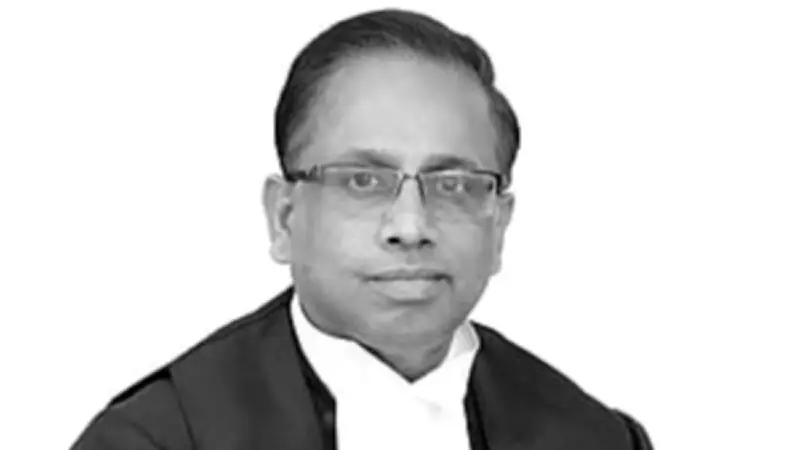
Supreme Court Justice Steps Aside from Case Following Disclosure of Prior Legal Involvement
In a significant development highlighting judicial propriety, Supreme Court Justice Viswanathan has formally recused himself from hearing a specific case. This decision came after information surfaced revealing that the judge had previously acted as legal counsel in the same matter before his elevation to the nation's highest court.
Background of Justice Viswanathan's Legal Career
Justice Viswanathan was directly elevated from the Bar to the Supreme Court bench on May 19, 2023, marking a notable appointment in India's judicial history. Prior to this, he had established himself as one of the country's leading legal practitioners. His distinguished career included being designated as a Senior Advocate by the Supreme Court itself in April 2009, a recognition of his exceptional expertise and standing within the legal community.
The Recusal and Its Implications
The recusal occurred when it was brought to light during proceedings that Justice Viswanathan had previously represented a party involved in the case during his time as an advocate. Judicial recusal in such circumstances is a standard ethical practice aimed at ensuring impartiality and maintaining public confidence in the judiciary. It prevents any perception of bias or conflict of interest that might arise from a judge's prior professional connections to a case.

This action underscores the rigorous ethical standards upheld within the Indian judiciary. When a judge has had previous involvement with a case as a lawyer, recusal is considered essential to preserve the integrity of the judicial process. The principle is that justice must not only be done but must also be seen to be done, free from any potential influence or preconception.
Wider Context and Procedural Norms
Such recusals are not uncommon in legal systems worldwide and are viewed as a positive reflection of judicial accountability. They demonstrate a commitment to transparency and fairness, ensuring that all parties receive a hearing before a neutral arbiter. The Supreme Court of India has established protocols and conventions to address situations where a judge's past professional activities might intersect with current judicial responsibilities.
The incident brings attention to the transition many eminent lawyers make when joining the bench, requiring them to set aside their prior advocacies to assume the role of an impartial judge. Justice Viswanathan's prompt recusal upon the revelation aligns with these ethical obligations, reinforcing the judiciary's dedication to upholding the highest standards of conduct.
This development serves as a reminder of the meticulous processes in place to safeguard judicial independence and the rule of law, ensuring that every case is adjudicated based solely on its merits and legal arguments, without any shadow of past associations.






