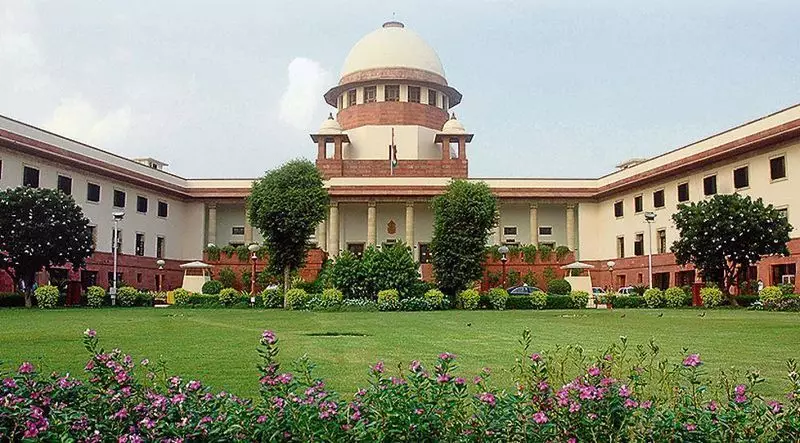
The Supreme Court of India has taken a significant step in addressing a controversial practice at Maharshi Dayanand University (MDU) in Rohtak, Haryana, where women employees were allegedly required to provide proof of their menstrual cycles. The apex court has issued formal notices to both the Central government and the Haryana state government following a petition that demands a thorough investigation into this invasive practice.
The Controversial Practice at MDU
According to the petition that reached the Supreme Court, female workers at Maharshi Dayanand University were subjected to an unprecedented and deeply personal requirement. Women employees were allegedly asked to provide medical documentation proving they were menstruating as part of the institution's attendance and leave policies. This practice has raised serious concerns about privacy violations and gender discrimination in workplace policies.
The petition, which was filed by concerned individuals and organizations, highlights how this requirement represents a gross invasion of female employees' privacy and dignity. The practice specifically targeted women workers and imposed upon them the burden of proving biological functions that are inherently private in nature.

Legal Proceedings and Supreme Court Intervention
The Supreme Court bench, comprising distinguished justices, took serious note of the allegations and decided that the matter required immediate attention from the highest levels of government. The court has formally issued notices to both the Central government and the Haryana state government, giving them a specific timeframe to respond to the allegations and present their stance on the controversial practice.
The legal action seeks not only to address the specific incident at MDU but also to establish broader protections for women workers across educational institutions and government offices. The petitioners have demanded a comprehensive investigation into how such a policy was implemented and who authorized the invasive requirement.
Broader Implications for Women's Rights
This case has sparked nationwide discussions about workplace dignity and gender equality in India. The requirement for menstrual proof represents a significant violation of women's fundamental rights to privacy and dignity under the Indian Constitution. Legal experts suggest that the practice potentially violates multiple provisions of Indian labor laws and constitutional protections against gender discrimination.
Women's rights organizations have expressed outrage over the incident, noting that such practices reinforce harmful stereotypes and create hostile work environments for female employees. The case has brought attention to the need for more sensitive and scientifically informed policies regarding women's health in workplace settings.
Education sector unions and women's rights activists have welcomed the Supreme Court's intervention, hoping that the case will set an important precedent for protecting women employees from similar invasive practices in other institutions across the country.
The outcome of this case is expected to have far-reaching implications for workplace policies not only in educational institutions but across all sectors where women are employed. It represents a critical test of India's commitment to gender equality and the protection of women's dignity in professional environments.