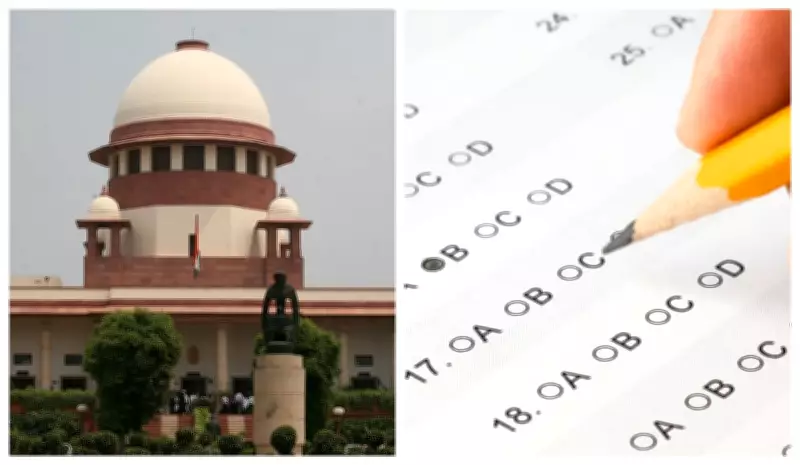
Supreme Court Mandates Dual Appointment to Law Officer Position in Chandigarh
In a landmark decision addressing judicial disagreement over examination answers, the Supreme Court of India has issued a directive for the appointment of two candidates to the post of law officer within the Chandigarh Municipal Corporation. This ruling comes after a contentious situation arose where judges at the High Court level differed in their interpretation of the correct answer in a crucial recruitment examination.
Background of the Case and Judicial Disagreement
The case originated from a recruitment process for the law officer position in Chandigarh, where candidates were evaluated based on a competitive examination. During subsequent legal challenges, High Court judges found themselves at odds over what constituted the correct answer to a specific question in the exam. This disagreement created a legal impasse, as it directly impacted the eligibility and ranking of the candidates involved.
The Supreme Court, upon reviewing the matter, recognized the complexity and ambiguity that led to the judicial divergence. Rather than favoring one interpretation over another, the apex court took a pragmatic approach to resolve the dispute and ensure justice for the affected candidates.

Court's Directive and Creation of Supernumerary Post
The Supreme Court has explicitly ordered the Chandigarh Municipal Corporation to accommodate both candidates by creating a supernumerary post. A supernumerary post is an additional position created temporarily or permanently beyond the sanctioned strength, specifically to address such exceptional circumstances without disrupting the existing organizational structure.
Key aspects of the court's directive include:
- Immediate appointment of both candidates to the law officer position.
- Mandate for the Municipal Corporation to establish a supernumerary post to facilitate the dual appointment.
- Ensuring that both appointees receive all due benefits and responsibilities associated with the role.
- Precedent-setting resolution for similar cases where judicial interpretation leads to deadlocks in recruitment processes.
Implications for Recruitment and Judicial Processes
This ruling underscores the Supreme Court's role in addressing ambiguities in competitive examinations and recruitment procedures. By opting for a solution that benefits both candidates, the court has highlighted the importance of fairness and equity in public employment, especially when legal interpretations diverge.
The decision is expected to influence future recruitment disputes, encouraging authorities to design examinations with greater clarity to minimize such conflicts. It also reinforces the judiciary's commitment to resolving complex administrative issues in a manner that upholds the principles of justice and inclusivity.
As the Chandigarh Municipal Corporation moves to implement this order, this case serves as a significant reference point for handling recruitment anomalies through judicial intervention, ensuring that candidates are not disadvantaged by procedural or interpretative uncertainties.