

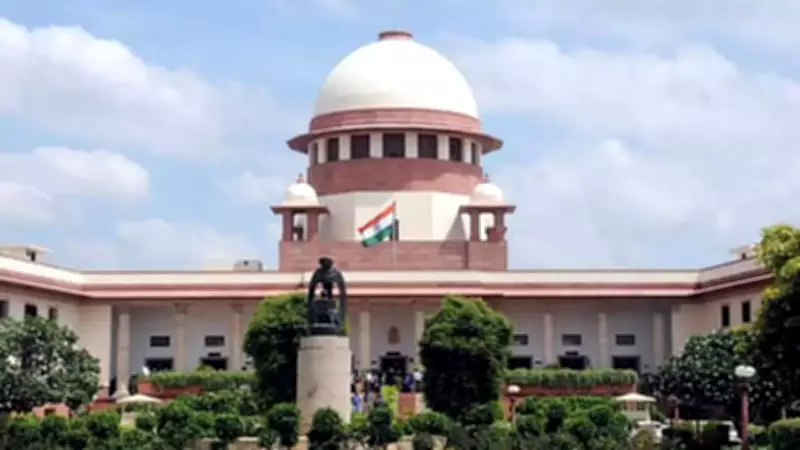
Supreme Court Orders Honorable Farewell for Ex-IAF Pilot After 33-Year Legal Battle
The Supreme Court of India has delivered a landmark judgment, directing that a septuagenarian former Indian Air Force pilot, who endured an ignominious dismissal from service 33 years ago, must now be granted a formal farewell with full military honors. The court ruled that his termination was arbitrary and in clear violation of established legal principles, thereby restoring his dignity and service entitlements after a protracted legal struggle spanning over three decades.
Justice Demands Restoration of Honor
In a powerful statement, a bench comprising Justices Dipankar Datta and K V Viswanathan emphasized that "justice demands that the ignominy with which the appellant had to survive more than three decades is obliterated, the wrongful termination of his service be revoked and his honour restored." The bench explicitly set aside the dismissal order dated September 22, 1993, declaring it illegal. While reinstatement is not feasible due to the officer having crossed the age of superannuation, the court affirmed his entitlement to all consequential service benefits that would have accrued had the dismissal not occurred.
Consequential Benefits and Financial Restitution
The Supreme Court has mandated the Central Government to provide the former pilot with 50% of his salary and allowances from 1993 until his official retirement date, along with all promotional and pensionary benefits. This financial restitution is part of the broader effort to rectify the injustice he suffered. The court underscored that "restoration of honour remains the foremost concern of defence personnel," and thus, the Chief of Air Staff is directed to organize a formal signing-off ceremony in the normal manner the officer would have been entitled to, had his service not been unjustly terminated.

Background of the Case
The case revolves around Squadron Leader R Sood, who was ordered by a senior officer to remove a drunken driver from the campus. Following this directive, Sood took the individual to a desolate location, after which a dead body was discovered there. Although he was tried in a criminal court and discharged due to lack of evidence, the Indian Air Force proceeded with a court-martial, resulting in his dismissal in 1993. This decision has now been overturned by the Supreme Court, which found the dismissal process to be arbitrary and unlawful.
Legal and Emotional Victory
This judgment marks a significant legal and emotional victory for the former pilot, who has fought tirelessly for over three decades to clear his name and restore his honor. The Supreme Court's ruling not only addresses the financial and service-related aspects but also focuses on the symbolic importance of honor for military personnel. By ordering a formal farewell, the court aims to publicly acknowledge the wrongful termination and provide a sense of closure and respect to the officer after years of hardship.
The directive serves as a reminder of the judiciary's role in upholding justice and protecting the rights of individuals, especially those in the armed forces, against arbitrary administrative actions. It sets a precedent for similar cases where service personnel may have faced unjust treatment, emphasizing the need for due process and the paramount importance of honor in military service.






