

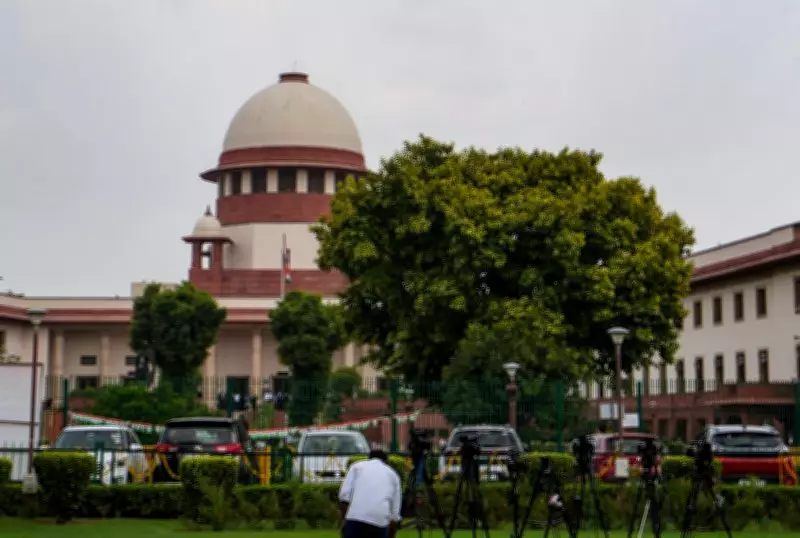
The Supreme Court of India on Thursday overturned the acquittal of nine individuals and sentenced them to life imprisonment for the murder of a doctor in Delhi in 2012. The bench, comprising Justices Uday Umesh Lalit and S. Ravindra Bhat, set aside the Delhi High Court's order that had acquitted the accused, citing overwhelming evidence against them.
Case Background
The victim, Dr. Rajesh, was a 32-year-old physician who was brutally attacked and killed by a group of men in the national capital. The incident occurred in 2012 when the doctor was returning home from his clinic. The assailants allegedly had a dispute with the doctor over a parking issue.
Trial and Acquittal
Initially, a trial court convicted all nine accused under various sections of the Indian Penal Code, including murder, and sentenced them to life imprisonment. However, in 2018, the Delhi High Court acquitted all of them, citing lack of evidence and inconsistencies in witness testimonies. The state government appealed against this acquittal in the Supreme Court.

Supreme Court Verdict
The Supreme Court, after examining the evidence and hearing arguments, concluded that the High Court had erred in its assessment. The bench noted that the prosecution had presented sufficient evidence, including eyewitness accounts and medical reports, to establish the guilt of the accused beyond reasonable doubt. The court observed that the High Court had overlooked crucial evidence and made unwarranted assumptions.
Key Points of the Judgment:
- The Supreme Court held that the High Court's acquittal was based on a flawed appreciation of evidence.
- The court emphasized that the testimony of eyewitnesses was consistent and credible.
- The medical evidence clearly indicated that the injuries sustained by the victim were homicidal in nature.
- The court rejected the defense's argument that the case was based on circumstantial evidence, stating that the evidence was direct and compelling.
Reactions
The family of the deceased expressed relief and satisfaction with the Supreme Court's decision. They had been fighting for justice for nearly a decade. The state government also welcomed the verdict, stating that it reaffirmed the faith in the judicial system.
The convicts, who were out on bail after the High Court's acquittal, have been taken into custody and will serve the remainder of their life sentences. The case serves as a reminder of the importance of a thorough and unbiased judicial process in delivering justice.






