Supreme Court Probes Fundamental Right to Perform Last Rites in Cremation Case
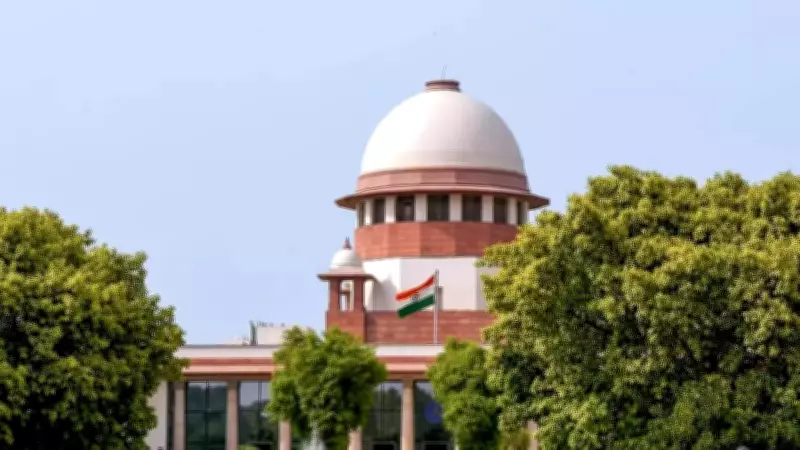
The Supreme Court of India has taken up a critical question: Is the right to perform cremation according to the deceased's religion and accompanying rituals a fundamental right of the family? This issue emerged from a poignant case involving a mother from Uttar Pradesh who alleged that her son was cremated on foreign soil without her participation.
Mother's Heartbreaking Plea to the Supreme Court
Fifty-seven-year-old Savitri, a resident of Basti in Uttar Pradesh, approached the Supreme Court with a distressing account. Her 29-year-old son, Pankaj, had been working as a carpenter with World Star Company in Sharjah, UAE, for the past two years. He went incommunicado on December 2, prompting Savitri to lodge a complaint with Basti police on January 10.
On February 4, she received a devastating call from the Indian Embassy in Dubai, informing her of Pankaj's death and his subsequent cremation in the UAE. The authorities had conducted the cremation without allowing family members to perform the last rites, a situation Savitri described as a profound violation of her rights.

Legal Arguments Presented in Court
Senior advocate Sanjay M Nuli, representing Savitri, argued before a bench comprising Justices Vikram Nath and Sandeep Mehta that as a mother, Savitri was entitled to ensure her son received a decent cremation. Nuli emphasized that cremation is one of the Sanskars, specifically Antim Sanskar—an essential ritual that should not be compromised under any circumstances.
"Denying the mother her right amounts to a gross violation of fundamental and human rights as enshrined under Articles 21 and 25 of the Constitution," Nuli asserted. He highlighted that this case touches upon the core of personal liberty and religious freedom, making it a matter of significant legal and ethical importance.
Supreme Court's Response and Next Steps
The bench, acknowledging the gravity of the issue, issued a notice to the Union government, seeking its response by March 16. This move underscores the court's intent to thoroughly examine whether the right to perform last rites qualifies as a fundamental right under Indian law.
The case raises broader questions about the intersection of religious practices, human rights, and state obligations, particularly in cross-border scenarios involving Indian citizens abroad. It also highlights the emotional and cultural significance of last rites in Indian society, where rituals are deeply intertwined with notions of dignity and closure.
As the legal proceedings unfold, this case could set a precedent for how similar situations are handled in the future, potentially reinforcing the protection of familial and religious rights in death-related matters.