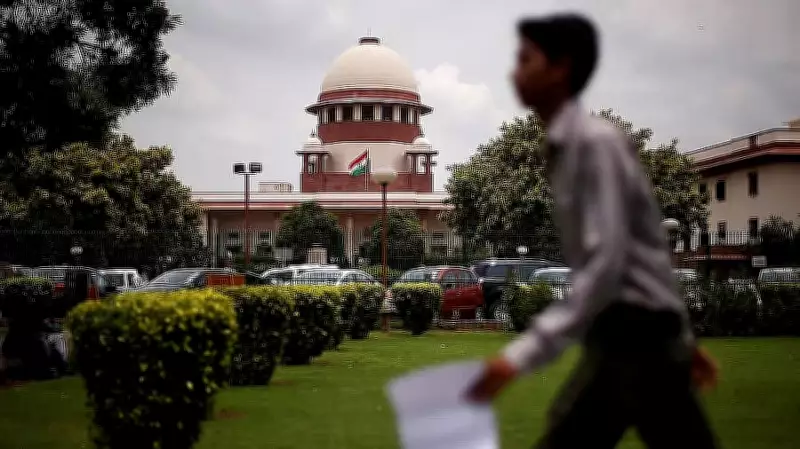
The Supreme Court of India has quashed a criminal complaint filed against a Kolkata-based hospital concerning alleged billing irregularities. The complainant had accused the hospital of intentionally charging Rs 2,500 for an HRCT test that was never performed and failing to provide medical records in a timely manner.
Background of the Case
The complainant, a patient or their representative, alleged that the hospital's billing practices were deceptive. Specifically, the hospital charged a sum of Rs 2,500 for a High-Resolution Computed Tomography (HRCT) scan, which, according to the complainant, was never administered. Additionally, the hospital was accused of delaying the provision of medical records, which the complainant argued hindered transparency and accountability.
Supreme Court's Ruling
Upon hearing the matter, the Supreme Court bench concluded that the allegations did not warrant criminal proceedings. The court observed that the discrepancies appeared to be civil in nature, potentially involving contractual or consumer rights, rather than criminal intent. The judgment emphasized that not every instance of overcharging or delayed service constitutes a criminal offense, especially when the dispute revolves around billing errors or administrative lapses.

The bench further noted that the complainant could pursue alternative legal remedies, such as filing a complaint with consumer forums or seeking civil damages, rather than invoking criminal law. The court quashed the criminal complaint to prevent the misuse of legal processes and to ensure that criminal courts are not burdened with matters that are essentially civil disputes.
Implications of the Verdict
This ruling sets a precedent for similar cases where patients or their families allege billing fraud against healthcare providers. The Supreme Court's decision reinforces the principle that criminal law should be reserved for cases involving clear fraudulent intent or systematic cheating, rather than isolated billing errors or delays. Healthcare institutions may find some relief as the judgment discourages the routine criminalization of billing disputes.
However, the court also stressed the importance of hospitals maintaining transparent billing practices and timely providing medical records. Failure to do so could still lead to civil liability or regulatory action. Patients retain the right to seek redress through consumer courts, which are better equipped to handle such disputes and award compensation.
Reactions and Next Steps
The hospital management welcomed the Supreme Court's decision, stating that it vindicates their position that the complaint was baseless. They reiterated their commitment to ethical billing and patient care. Meanwhile, legal experts have noted that the judgment clarifies the boundaries between criminal and civil liability in healthcare disputes.
The complainant may now consider approaching a consumer forum or civil court to seek compensation for the alleged overcharge and inconvenience caused by delayed records. The case highlights the need for robust grievance redressal mechanisms in the healthcare sector to address patient concerns without resorting to criminal litigation.