

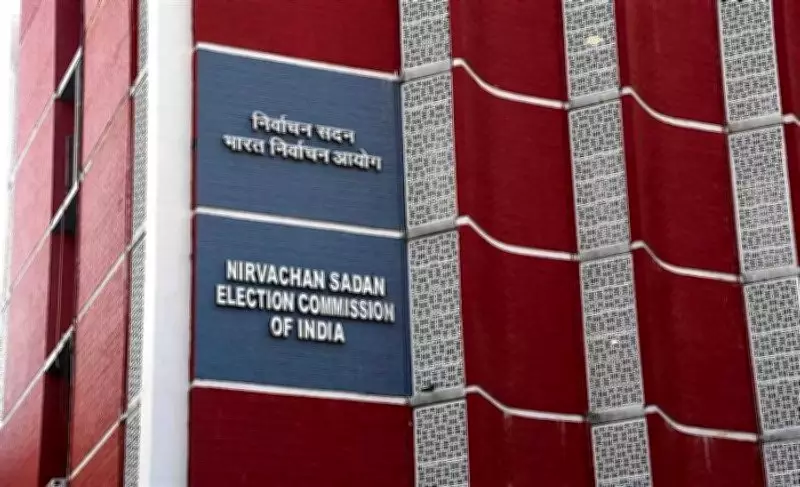
The Supreme Court of India on Wednesday raised significant questions regarding the constitutional validity of the existing law that governs the appointment of the Chief Election Commissioner (CEC) and Election Commissioners (ECs). A bench comprising Justices Sanjiv Khanna and Dipankar Datta was hearing a plea challenging the current appointment process, which is conducted by the President on the advice of the Council of Ministers.
Court's Observation on Parliamentary Direction
During the proceedings, the bench asked whether it could direct Parliament to enact a new law on the subject. The court noted that while it has the power to strike down unconstitutional laws, issuing a directive to the legislature might be a step too far. The observation came in response to arguments by the petitioners, who contended that the current process violates the principle of independence of the Election Commission.
Petitioner's Argument
The petitioners, represented by senior advocate Vikas Singh, argued that the appointment of the CEC and ECs should be made by a collegium comprising the Prime Minister, the Chief Justice of India, and the Leader of the Opposition. They claimed that the existing system, where the executive has the sole discretion, undermines the impartiality of the Election Commission. The court, however, expressed reservations about the feasibility of such a collegium system.

Legal and Constitutional Context
Article 324 of the Constitution provides for the establishment of the Election Commission but does not specify the appointment procedure. The current law, the Election Commission (Conditions of Service of Election Commissioners and Transaction of Business) Act, 1991, gives the central government the authority to appoint the CEC and ECs. The Supreme Court has previously examined this issue in various cases, including the 1993 judgment in S.S. Dhanoa vs Union of India, where it upheld the government's discretion.
The petitioners argued that the law is in conflict with the basic structure of the Constitution, as it compromises the independence of the Election Commission. They cited the Supreme Court's 2015 judgment in Anoop Baranwal vs Union of India, where the court had suggested the need for a transparent appointment process.
Court's Dilemma
The bench acknowledged the importance of an independent Election Commission but expressed caution about overstepping its jurisdiction. Justice Khanna remarked, "We cannot direct Parliament to make a law; that is the legislature's domain. But we can certainly examine whether the existing law is constitutional." The court also noted that any change in the appointment process would require a constitutional amendment, which is a legislative function.
Future Course
The Supreme Court has scheduled the next hearing for July, allowing time for the central government to file its response. The court indicated that it would first decide on the maintainability of the petition before delving into the merits. Meanwhile, the Election Commission has maintained that the current process is adequate and ensures the body's independence.
The case has significant implications for the electoral process in India, especially with the upcoming general elections in 2024. A decision from the Supreme Court could reshape the appointment mechanism, potentially enhancing the autonomy of the Election Commission.






