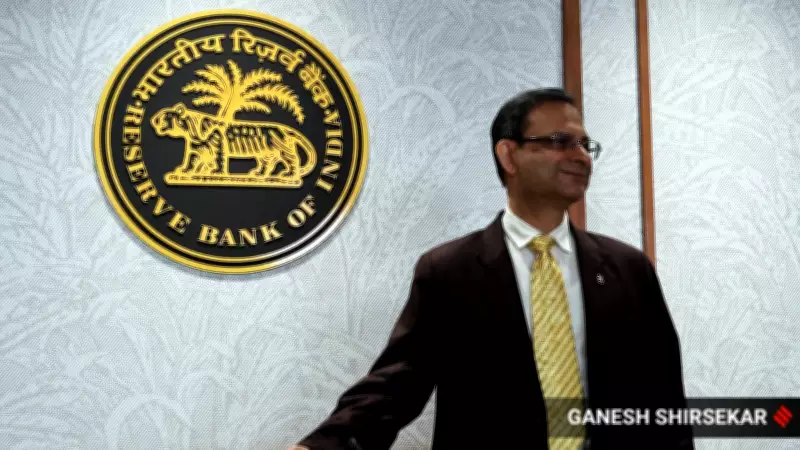
Supreme Court Orders Fresh Review of IRS Officer's ITAT Candidature, Criticizes RBI Governor's Role
The Supreme Court of India has delivered a significant judgment, sharply criticizing the presence of former revenue secretary and current Reserve Bank of India (RBI) Governor Sanjay Malhotra on a committee that rejected the candidature of a senior Indian Revenue Service (IRS) officer for the Income Tax Appellate Tribunal (ITAT). The court has ordered a fresh evaluation of the officer's candidacy, emphasizing principles of natural justice and fairness in public appointments.
Court's Strong Remarks on Bias and Fairness
In a judgment authored by Justice Sandeep Mehta and delivered by a bench comprising Justices Vikram Nath and Sandeep Mehta on January 30, 2026, the apex court set aside the 2024 decision of the Search-Cum-Selection Committee (SCSC) that had rejected the candidature of Captain Pramod Kumar Bajaj. The court noted that Malhotra, referred to as "the Officer" in the judgment, had previously faced contempt proceedings initiated by Bajaj, creating a clear conflict of interest.
The bench stated unequivocally that "in the interest of fairness and to dispel any reasonable apprehension of bias, it would have been appropriate for 'the Officer' to have recused from the evaluation process on his own. His failure to do so fortifies the aspersion of bias." The court emphasized that the rule of law is foundational to a well-governed society, and any shadow of bias in public functions undermines this principle.

Directives for Fresh Proceedings
The Supreme Court has issued specific directives to ensure a transparent and impartial review process. It has ordered the Department of Personnel and Training (DoPT) to convene a fresh meeting of the SCSC within four weeks to reconsider Bajaj's candidature. Crucially, the court mandated the exclusion of Malhotra from these proceedings to eliminate any perceived bias.
Furthermore, the outcome of the SCSC's deliberations must be communicated to Bajaj within two weeks after the meeting. The court also imposed a cost of Rs 5 lakh on the Centre for what it termed "rank procrastination" and deliberate obstacles in Bajaj's path, describing these actions as bordering on vendetta. This amount is to be deposited with the court's registry for payment to Bajaj.
Background of the Legal Battle
The case stems from a protracted 12-year legal battle waged by Captain Pramod Kumar Bajaj, an IRS officer with an unblemished record. Bajaj, who joined the Army in 1990 and later cleared the civil services exam to become an IRS officer, was promoted to income tax commissioner in 2012. In 2014, he applied for the post of member (accountant) at ITAT and was ranked first in the all-India merit list by an SCSC headed by a sitting Supreme Court judge.
However, his appointment was stalled due to alleged adverse Intelligence Bureau inputs related to litigation with his estranged spouse. This led to multiple rounds of litigation before the Central Administrative Tribunal (CAT), the Allahabad High Court, and the Supreme Court, all of which ruled in Bajaj's favor. Despite these victories, his appointment remained pending.
In a contempt of court case, the Supreme Court summoned Malhotra, who then tendered an unconditional written apology. Yet, Bajaj's candidature was still not processed. He was later called before a fresh SCSC that included Malhotra as a member, which subsequently rejected his application, prompting the current legal challenge.
Court's Observations on Natural Justice
The Supreme Court highlighted that Malhotra's inclusion in the SCSC, despite the prior contempt proceedings, created a genuine perception of bias and violated natural justice principles. The bench noted, "Nonetheless, we feel that the inclusion of 'the Officer' as a member of the SCSC, which rejected the petitioner’s candidature, has undoubtedly created a genuine perception of bias in the mind of the petitioner and was in gross violation of the principles of natural justice."

The judgment added that while Malhotra was only one member of the committee, his participation rendered the decision-making process vulnerable and gave rise to reasonable apprehension of bias. The court refrained from making further observations on Malhotra's role, citing his current sensitive position as RBI Governor, but underscored the importance of impartiality in public appointments.
This ruling reinforces the judiciary's commitment to upholding transparency and fairness in administrative processes, setting a precedent for future cases involving potential conflicts of interest in selection committees.