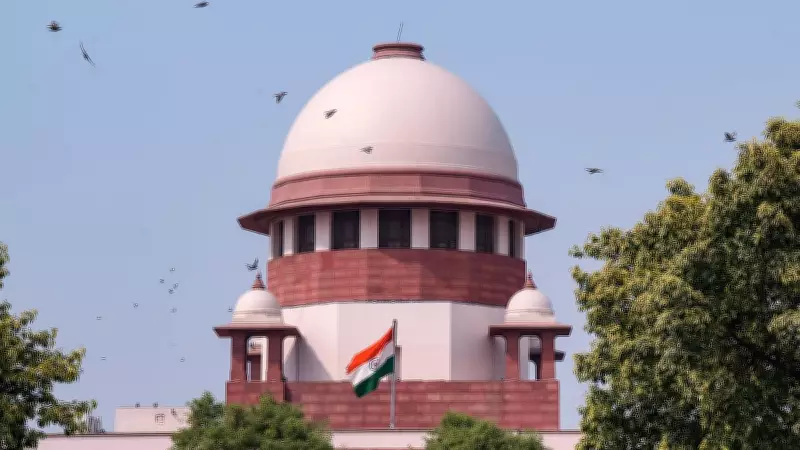
The Supreme Court has referred the question of the scope of a third judge's powers in criminal appeals to a larger bench. A bench of Justices Dipankar Datta and Satish Chandra Sharma raised concerns about whether a third judge can reopen issues that were unanimously decided by the original division bench of a high court.
Background of the Case
The matter arose from a criminal appeal where a division bench of a high court had delivered a unanimous verdict. Subsequently, a third judge was appointed to hear the case, leading to questions about the extent of the third judge's authority. The Supreme Court bench noted that this issue has significant implications for the judicial process and the finality of judgments.
Key Questions Raised
The bench questioned whether a third judge can revisit findings of fact or law that were agreed upon by both judges of the division bench. It also examined whether the third judge's role is limited to resolving differences between the two judges or extends to a de novo review of the entire case.

Justice Dipankar Datta observed, "If a division bench unanimously decides an issue, can a third judge reopen it? This is a matter of great importance." Justice Satish Chandra Sharma added that the issue requires clarity to ensure consistency in judicial proceedings.
Reference to Larger Bench
Given the complexity and significance of the question, the bench decided to refer the matter to a larger bench for an authoritative interpretation. The larger bench will examine the scope of a third judge's powers under the relevant legal provisions and precedents.
The Supreme Court's decision is expected to have far-reaching consequences for criminal appeals in high courts across the country. It will clarify the boundaries of a third judge's jurisdiction and ensure uniformity in the application of the law.
The case has been listed for further hearing before the larger bench, which will deliver its verdict on the issue.