

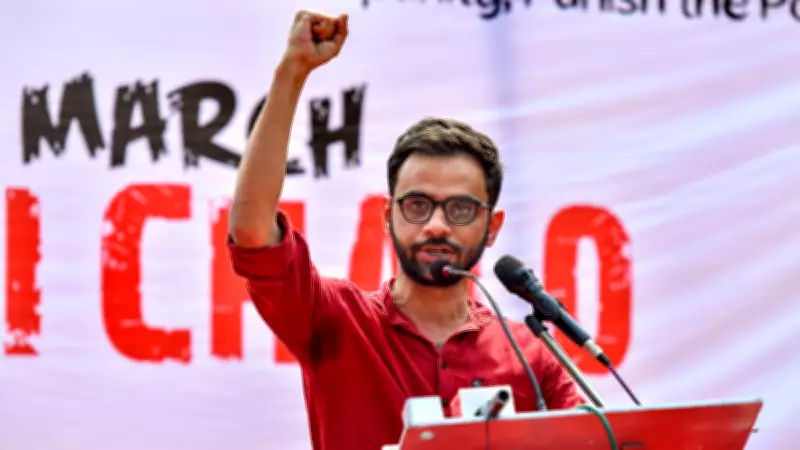
The Supreme Court of India has taken a significant step in the case of former JNU student Umar Khalid, who is accused in the 2020 Delhi riots conspiracy case. On Tuesday, a bench comprising Justices A.S. Bopanna and M.M. Sundresh decided to refer the matter concerning Khalid's bail to a larger bench for further deliberation. This decision comes after the court reconsidered its earlier order that had denied bail to the activist.
Background of the Case
Umar Khalid was arrested in September 2020 under the Unlawful Activities (Prevention) Act (UAPA) for his alleged role in the conspiracy behind the Delhi riots that occurred in February 2020. The violence had resulted in over 50 deaths and hundreds of injuries. Khalid, along with other activists, has been accused of orchestrating the protests against the Citizenship Amendment Act (CAA) that turned violent. He has been in judicial custody since his arrest.
Earlier Bail Denial
Previously, the Supreme Court had denied bail to Umar Khalid in October 2022, observing that there was prima facie evidence against him. However, the recent development indicates a shift in the court's approach, as it acknowledged the need for a more thorough examination of the legal issues involved. The court noted that the case raises important questions regarding the interpretation of UAPA provisions, particularly concerning the standard of proof required for bail.

Referral to Larger Bench
The bench decided to refer the matter to a larger bench, stating that the issues involved are of significant legal importance. The court will now await the constitution of a larger bench to hear the case. This move has been seen as a ray of hope for Khalid and his supporters, who have maintained his innocence and argued that he is being targeted for his political views.
Reactions and Implications
The decision has sparked mixed reactions. While Khalid's family and legal team have expressed optimism, the Delhi Police and the prosecution have maintained that the evidence against him is strong. Legal experts believe that the referral could set a precedent for how UAPA cases are handled in the future, especially regarding bail jurisprudence.
The larger bench is expected to examine whether the stringent conditions of UAPA for granting bail have been correctly applied in this case. The outcome could have far-reaching consequences for other accused in the case, including activist Sharjeel Imam and others.
Next Steps
The Supreme Court has not yet set a date for the hearing before the larger bench. Meanwhile, Umar Khalid remains in custody. His legal team has vowed to continue fighting for his release, arguing that the prolonged detention without trial violates his fundamental rights.
This development comes amid ongoing debates about the use of UAPA and the rights of activists in India. The case has attracted national and international attention, with many calling for Khalid's release on humanitarian grounds.






