Supreme Court Refuses to Entertain Petitions Against Assam CM Over Controversial Video
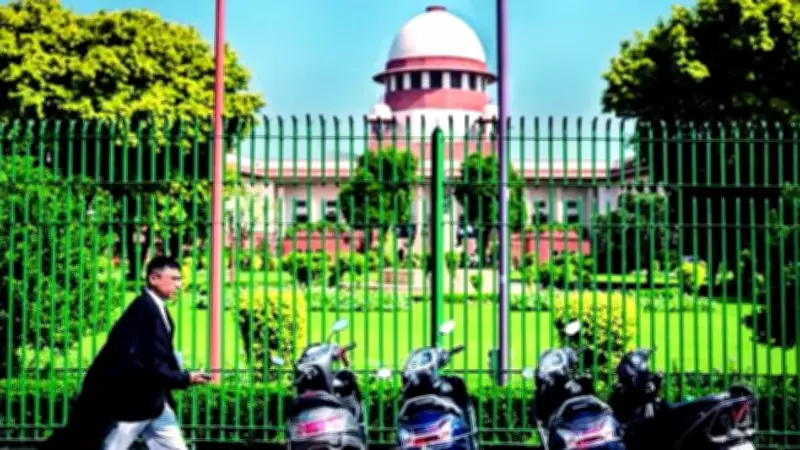
The Supreme Court of India on Monday firmly declined to entertain petitions that sought the registration of a First Information Report (FIR) and the constitution of a Special Investigation Team (SIT) probe against Assam Chief Minister Himanta Biswa Sarma. The petitions were related to a controversial video that allegedly showed Sarma engaging in target-shooting activities. The apex court directed the petitioners to instead approach the Gauhati High Court for appropriate legal recourse.
Court Questions Petitioners' Approach and Upholds Judicial Hierarchy
A bench comprising Chief Justice Sanjiv Khanna, Justice Joymalya Bagchi, and Justice Vikul Pancholi raised pointed questions about why the petitioners had bypassed the Gauhati High Court. The bench emphasized that the authority of the high courts should not be undermined by directly approaching the Supreme Court in such matters. The justices expressed concern over what they described as a disturbing trend of filing petitions directly before the apex court, particularly around election periods.
The bench stated, "This is a disturbing trend that every matter ends up here. We have already deprived high courts of environmental and commercial litigations." They further advised all parties to exercise restraint and remain within the boundaries of constitutional morality, highlighting the importance of maintaining judicial decorum and proper legal procedures.
Background of the Controversial Video
The legal petitions stemmed from a video that was posted on social media platform X by the Bharatiya Janata Party's Assam unit. The video purportedly showed Chief Minister Himanta Biswa Sarma aiming a rifle at two individuals, one wearing a skullcap and another with a beard. The video sparked significant backlash and public controversy, leading to its eventual deletion from the platform. The petitioners argued that the video warranted a thorough investigation through an FIR and SIT probe to ascertain any potential legal violations or ethical breaches.
The Supreme Court's refusal to intervene at this stage underscores its commitment to preserving the hierarchical structure of the Indian judiciary. By redirecting the matter to the Gauhati High Court, the apex court has reinforced the principle that lower courts and high courts must be the first points of contact for such legal disputes, unless exceptional circumstances warrant direct Supreme Court involvement.
Implications for Future Legal Proceedings
This development sets a precedent for how similar cases might be handled in the future, especially those involving high-profile political figures. The court's observations about petitions being filed strategically before elections suggest a growing scrutiny of the timing and motives behind such legal actions. Legal experts note that this ruling could encourage petitioners to exhaust all available remedies at the high court level before seeking intervention from the Supreme Court, thereby streamlining judicial processes and reducing the burden on the apex court.
As the matter now moves to the Gauhati High Court, all eyes will be on how the high court addresses the petitions and whether it orders any investigations into the controversial video. The Supreme Court's directive serves as a reminder of the foundational principles of Indian jurisprudence, where each tier of the judiciary plays a distinct and vital role in upholding justice and the rule of law.