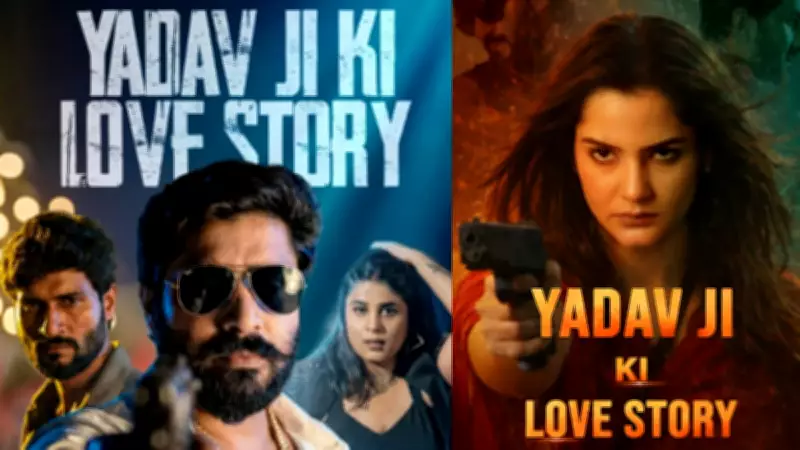
Supreme Court Dismisses Petition to Ban 'Yadav ji ki Love Story' Film Title
The Supreme Court of India has firmly rejected a petition that sought to ban the film title 'Yadav ji ki Love Story', delivering a significant ruling that upholds creative expression while addressing community concerns. In a detailed judgment, the court explicitly stated that the title does not portray the Yadav community in a negative or derogatory light, thereby dismissing the apprehensions raised by the petitioners as "wholly unfounded."
Bench Distinguishes Case from Previous 'Ghooskhor Pandat' Order
A bench comprising Justices B V Nagarathna and Ujjal Bhuyan carefully examined the matter, drawing a clear distinction from an earlier case involving the film 'Ghooskhor Pandat'. In that previous instance, the Supreme Court had directed the producer to change the movie's title due to its potentially offensive nature. However, in the present case, the bench found no such grounds for intervention, emphasizing that 'Yadav ji ki Love Story' does not carry any defamatory or harmful connotations against the Yadav community.
The court's analysis highlighted that the title merely references a love story involving a character named Yadav, without any intent to malign or stereotype the community. This ruling underscores the judiciary's nuanced approach to balancing artistic freedom with social sensitivities, ensuring that only titles with genuinely harmful implications are subject to legal restrictions.
Legal and Social Implications of the Ruling
This decision has broader implications for the film industry and cultural discourse in India:
- Protection of Creative Liberty: The ruling reinforces the principle that film titles, as part of artistic expression, should not be censored without substantial evidence of harm or defamation.
- Community Sensitivity: While dismissing the petition, the court acknowledged the importance of respecting community sentiments, but clarified that mere apprehension without concrete proof is insufficient for a ban.
- Precedent Setting: By distinguishing this case from 'Ghooskhor Pandat', the Supreme Court has provided clearer guidelines for future disputes involving film titles and community representation.
The judgment also reflects the evolving legal landscape in India, where courts are increasingly called upon to mediate between creative industries and social groups. In this instance, the Supreme Court's refusal to impose a ban serves as a reminder that legal interventions must be based on factual assessments rather than unfounded fears.
As the film 'Yadav ji ki Love Story' proceeds without title changes, this ruling is expected to influence how similar cases are handled, promoting a more measured and evidence-based approach to disputes over cultural content. The decision ultimately champions a middle ground, where artistic freedom is safeguarded while ensuring communities are protected from genuine harm.