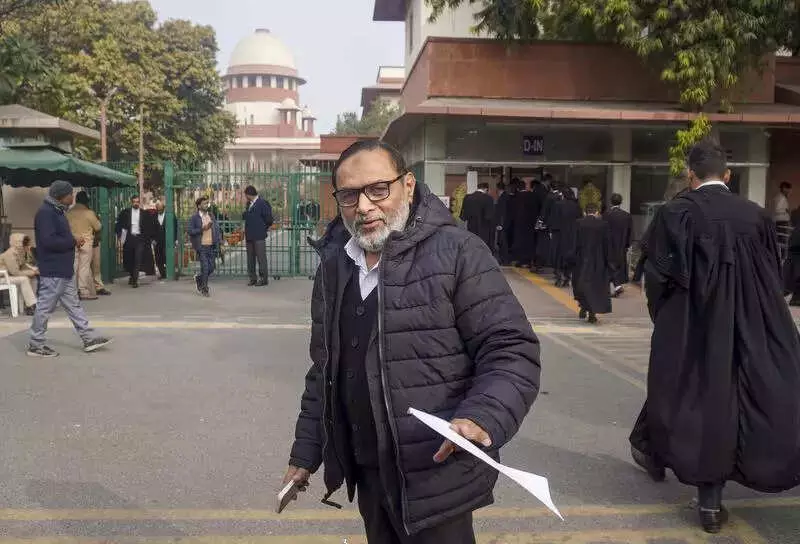
The Supreme Court of India has delivered a significant verdict, rejecting the bail pleas of former JNU student leader Umar Khalid and activist Sharjeel Imam in connection with the 2020 Delhi riots conspiracy case. The bench, comprising Justices Bela M. Trivedi and Pankaj Mithal, upheld the earlier decisions of the Delhi High Court and the trial court, finding no grounds for interference.
The Court's Reasoning and Prima Facie Findings
In its detailed order, the apex court emphasized that at the bail stage, it only needed to see if a prima facie case existed against the accused. The bench concluded that the charges, framed under the stringent Unlawful Activities (Prevention) Act (UAPA), were indeed supported by initial evidence. The court noted the allegations pointed towards a larger conspiracy behind the communal violence that engulfed northeast Delhi in February 2020, resulting in over 50 deaths and widespread destruction.
The judges stated that the material presented by the prosecution, including speeches and alleged coordination, indicated a prima facie case that the accused were involved in the conspiracy. The court referenced the chargesheet, which alleges that Khalid, Imam, and others were part of a pre-meditated plan to incite violence during the protests against the Citizenship Amendment Act (CAA).

Specific Allegations and Legal Scrutiny
The prosecution's case hinges on the claim that the accused orchestrated the riots under the guise of peaceful protests. Umar Khalid's speech at Amravati in Maharashtra was cited as part of the evidence suggesting a coordinated effort. Sharjeel Imam's alleged inflammatory speeches are also central to the case against him.
The Supreme Court meticulously examined whether the actions of the accused fell within the definition of a terrorist act under the UAPA. It considered arguments from the defense that the charges were baseless and that no violence could be directly linked to their clients. However, the bench found that the collected material, at this preliminary stage, was sufficient to deny bail, especially given the serious nature of the charges under an anti-terror law where bail provisions are exceptionally strict.
The court clarified that its observations were only for the purpose of deciding the bail application and would not influence the final trial. The ultimate truth, it noted, must be established during the full-fledged trial where evidence will be tested through cross-examination.
Wider Implications and Legal Precedent
This ruling reinforces the high legal threshold for securing bail under the UAPA. It underscores the judiciary's cautious approach in cases where allegations of a larger conspiracy to threaten national integrity and public order are involved. The decision is likely to set a precedent for other pending bail applications in the same case, involving numerous other accused individuals.
For Umar Khalid and Sharjeel Imam, this means a continued incarceration as they await trial. Their legal teams have consistently argued that they are being persecuted for dissent and that the UAPA is being misapplied. The Supreme Court's order, however, prioritizes the prima facie view of the evidence presented by the investigating agencies.
The Delhi riots conspiracy case remains one of the most high-profile legal proceedings in recent years, intertwining issues of protest, citizenship laws, and state security. This Supreme Court order marks a crucial juncture, keeping the focus on a protracted legal battle where the final determination of guilt or innocence is still years away.