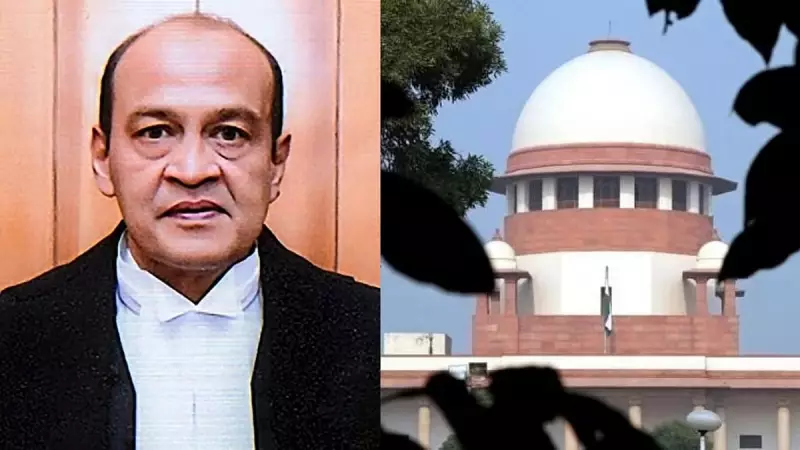
The Supreme Court of India delivered a significant ruling on Thursday, rejecting a petition filed by Justice Yashwant Varma. Justice Varma had challenged the formation of a parliamentary committee set up to investigate corruption charges against him.
Court Clears Path for Parliamentary Probe
A bench comprising Justices Dipankar Datta and Satish Chandra Sharma heard the case. They ruled decisively that Justice Varma was not entitled to any relief through his petition. This decision effectively removes the legal hurdle that had been blocking the parliamentary inquiry.
Details of the Parliamentary Committee
The three-member inquiry committee was constituted by the Lok Sabha Speaker. Its mandate is to probe serious corruption allegations leveled against Justice Yashwant Varma. With the Supreme Court's rejection of the plea, this committee can now proceed with its investigation without further delay.

The bench's ruling emphasized the parliamentary process. It stated that the formation of such committees falls within the legitimate domain of parliamentary authority. The court found no grounds to interfere with this established procedure.
Background of the Case
Justice Yashwant Varma, a sitting judge, faces multiple corruption allegations. These charges prompted the Lok Sabha Speaker to establish the special investigative panel. Justice Varma then approached the Supreme Court, seeking to halt the committee's formation and questioning its constitutional validity.
The Supreme Court's rejection marks a setback for Justice Varma's legal strategy. It means the parliamentary committee will continue its work, potentially leading to further proceedings that could include an impeachment motion if the investigation finds sufficient evidence.
What This Means for Judicial Accountability
This case highlights the mechanisms for addressing allegations against high-ranking judicial officials. The parliamentary probe represents one of the few avenues available for investigating sitting judges. The Supreme Court's decision reinforces the separation of powers, acknowledging Parliament's role in such matters.
Legal experts note that such committees operate independently. They gather evidence, interview witnesses, and compile reports that may inform future parliamentary actions. The process is designed to be thorough and impartial, though it remains politically sensitive.
The ruling comes at a time when judicial accountability is under increased public scrutiny. Many citizens and legal observers are watching how institutions handle allegations against members of the judiciary. This case may set important precedents for future similar situations.
Justice Varma's legal team has not yet indicated whether they will pursue further appeals. For now, the parliamentary committee has the green light to advance its corruption investigation.