Supreme Court Transfers OBC Reservation Challenge to Madhya Pradesh High Court
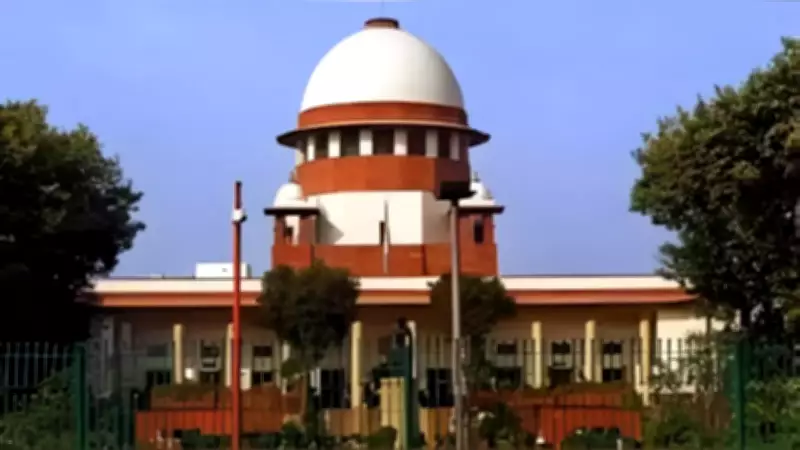
The Supreme Court of India has taken a significant procedural step in the ongoing legal battle over reservation policies in Madhya Pradesh. In a notable development, the apex court has remanded a comprehensive batch of petitions challenging the validity of the state's enhancement of Other Backward Classes (OBC) reservation from 14 percent to 27 percent back to the Madhya Pradesh High Court for detailed examination and adjudication.
Background of the OBC Quota Enhancement
This legal controversy originated in 2019 when the Madhya Pradesh state government implemented a substantial increase in the OBC quota allocation for government employment positions and admissions to educational institutions across the state. The policy shift from 14 percent to 27 percent reservation sparked immediate legal challenges from various petitioners who questioned the constitutional validity and implementation framework of this affirmative action measure.
Supreme Court Bench Proceedings and Rationale
A distinguished bench comprising Justices P S Narasimha and Alok Aradhe presided over the hearing on February 19, where they considered multiple appeals, special leave petitions, transferred cases, and writ petitions collectively addressing the reservation enhancement issue. After thorough deliberation, the bench articulated a clear judicial philosophy regarding the appropriate forum for such state-specific policy examinations.

The justices emphasized that while affirmative action and reservation policies represent fundamental constitutional obligations and legitimate matters of state policy determination, the high court of the concerned state possesses the institutional competence and contextual understanding necessary to conduct the initial, comprehensive review of challenges to such policy decisions.
"We are of the firm opinion that the High Court of Madhya Pradesh will be in the optimal position to consider, evaluate, and take a holistic view of both the necessity and the legal validity of the affirmative action measures specifically designed for the state," the bench stated in its reasoned order.
Procedural Directives and Timelines
The Supreme Court issued specific procedural instructions to ensure expeditious resolution of the matter. The bench formally requested the Chief Justice of the Madhya Pradesh High Court to constitute a special dedicated bench specifically tasked with hearing all related petitions concerning the OBC reservation enhancement. Furthermore, the apex court explicitly requested that this specially constituted bench complete its hearings and deliver a decision within a strict three-month timeframe from the commencement of proceedings.
"The interests of all parties involved can be appropriately balanced and protected by ensuring a prompt, efficient, and thorough hearing process at the high court level," the bench observed, highlighting the importance of timely judicial resolution for such socially significant matters.
Constitutional Considerations and Judicial Restraint
The Supreme Court bench demonstrated notable judicial restraint by clarifying that it would be inappropriate for the apex court to independently examine the substantive issues raised under Article 32 of the Constitution without first allowing the state high court to conduct its primary assessment and deliver its verdict. This approach respects the hierarchical structure of India's judicial system while ensuring that constitutional questions receive appropriate scrutiny at multiple levels.
"In consideration of these principles and procedural requirements, we hereby remand the entire batch of these appeals, special leave petitions, transferred cases, and writ petitions to the jurisdictional authority of the High Court of Madhya Pradesh for proper adjudication," the court formally ordered in its concluding remarks.

Important Clarifications and Limitations
The Supreme Court took care to explicitly clarify that its remand order does not constitute any expression of opinion regarding the substantive merits of the case or the underlying legal arguments presented by either side. Additionally, the bench specified that it has not made any determinations concerning interim arrangements or temporary measures that might be necessary while the high court proceedings are pending final disposal.
This procedural decision represents a significant development in India's ongoing judicial engagement with reservation policies, particularly regarding the appropriate balance between state autonomy in affirmative action design and constitutional safeguards against excessive or improperly implemented quota systems. The three-month timeline imposed by the Supreme Court adds urgency to what promises to be a closely watched legal examination of Madhya Pradesh's OBC reservation framework.