

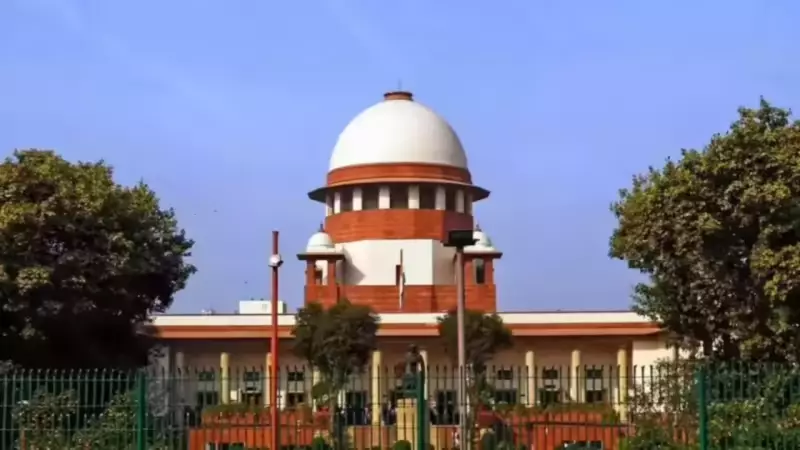
The Supreme Court of India has concluded hearings and reserved its judgment in a significant case concerning the impeachment process of a sitting High Court judge. The legal challenge was brought by Allahabad High Court Judge Justice Yashwant Varma, who is contesting the procedural validity of an inquiry committee constituted against him.
The Core of the Legal Dispute
At the heart of the case lies a challenge to the decision made by Lok Sabha Speaker Om Birla. Justice Varma's petition argues that the Speaker acted unilaterally by forming a probe committee under the Judges (Inquiry) Act of 1968. This committee was set up to investigate corruption charges mentioned in an impeachment motion filed against the judge.
Varma's legal team, led by senior advocates Mukul Rohatgi and Siddharth Luthra, presented a key procedural argument. They contended that although notices for impeachment were submitted in both Houses of Parliament, Speaker Om Birla constituted the inquiry committee without waiting for the motion to be admitted by the Rajya Sabha Chairman.

Contesting Interpretations of the Judges (Inquiry) Act
The petitioner's argument hinges on a specific proviso within Section 3 of the Judges (Inquiry) Act, 1968. This provision, as interpreted by Varma's counsel, envisions a joint consultation between the Lok Sabha Speaker and the Rajya Sabha Chairman when an impeachment motion is introduced in both Houses.
However, Solicitor General Tushar Mehta, representing the Lok Sabha Secretariat, presented a counter-argument. He submitted that the proviso would not be triggered in this instance because the Rajya Sabha did not admit the impeachment motion. Mehta informed the court that the motion was ultimately rejected by the Rajya Sabha Deputy Chairman on August 11, 2025. This rejection came after the then Chairman, Vice President Jagdeep Dhankhar, had resigned in July of that year.
Supreme Court's Observations and Awaiting Judgment
The bench comprising Justices Dipankar Datta and S C Sharma heard extensive arguments from both sides before reserving its verdict on Thursday. During the proceedings, the court made a notable oral observation. It indicated that the Judges Inquiry Act does not explicitly bar the Lok Sabha Speaker from setting up an inquiry committee even after a similar motion has been rejected in the Rajya Sabha.
This observation suggests the court is examining the scope of the Speaker's powers independently of the Upper House's actions. The reserved verdict will now determine the legality of the inquiry committee's formation and could set a crucial precedent for future impeachment proceedings against judges in India, clarifying the procedural interplay between the two Houses of Parliament under the 1968 Act.






