

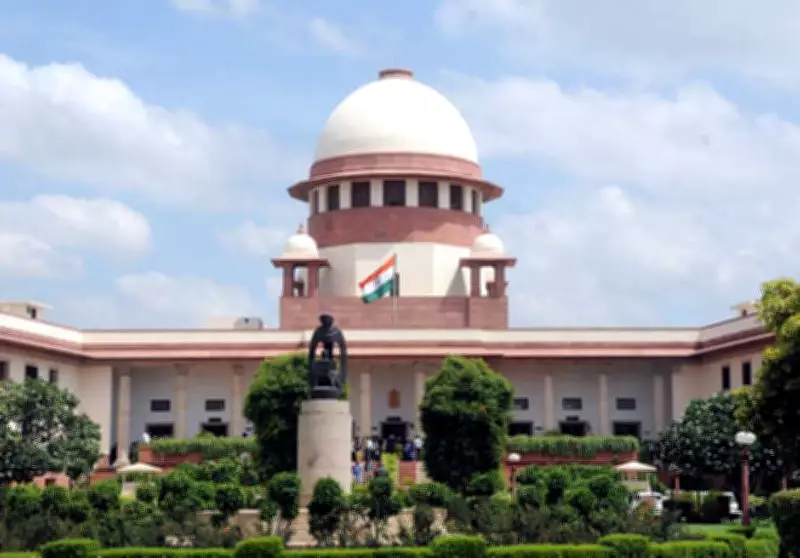
Supreme Court Seeks Centre's Response on Surrogacy-Linked Child Trafficking Report
The Supreme Court has directed the Central government to file a response to a report that exposes serious deficiencies in the regulatory framework governing Assisted Reproductive Technology (ART) and surrogacy centres, which are allegedly being exploited by trafficking networks. The report, submitted by senior advocate and amicus curiae Aparna Bhat, describes a distressing reality where babies are traded like commodities.
In her submission to the bench comprising Justice JB Pardiwala and Justice K Viswanathan, Bhat emphasised that human trafficking has expanded into new and alarming dimensions. Beyond the well-known forms of sex trafficking and forced labour, trafficking now occurs for purposes such as marriage, organ transplantation, begging, and even forced criminality. The report underscores that the existing legal framework, including the ART Act and the Surrogacy (Regulation) Act, 2021, contains comprehensive provisions for infrastructure and medical standards but fails to specifically address trafficking risks.
Bhat pointed out that despite the establishment of a national Board under the ART Act, a national Registry operational since April 2022, and various state-level bodies, there is no Standard Operating Procedure (SOP) tailored to prevent child trafficking through ART and surrogacy facilities. Moreover, no SOP exists for inter-state coordination in cases involving missing and trafficked children. She highlighted alarming statistics from the National Crime Records Bureau (NCRB) 2024 report, which recorded over 6,000 trafficking cases and a 7.8% increase in missing children reports. In 2024 alone, 98,375 children were reported missing, and the cumulative number of untraced children reached 1,47,175.

The amicus curiae stressed that the current framework is inadequate to protect children despite existing penal laws. She called for a comprehensive roadmap to prevent trafficking, a rehabilitation plan with sufficient resources, and a specific SOP for ART and surrogacy centres. The bench has granted time until August 19 for Additional Solicitor General Archana Dave Pathak to respond to the report.
Bhat also noted that while the Union of India has demonstrated intent to address trafficking, significant gaps remain in legislation and implementation. There is no mention of impact assessment or audit mechanisms in the affidavits submitted by states and union territories. She recommended identifying existing schemes to draw resources and proposing additional resources where necessary.
The Supreme Court has been monitoring compliance with its earlier directions on child trafficking and continues to seek effective measures to combat this growing menace.






