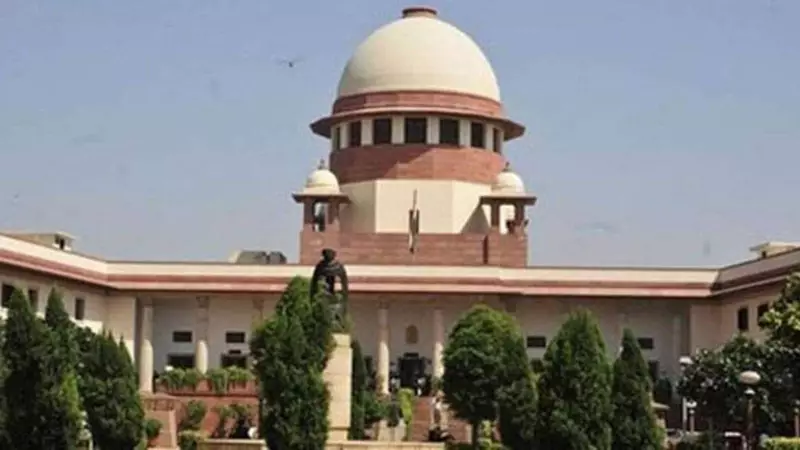
In a landmark ruling that reinforces the independence of the lower judiciary, the Supreme Court of India on Monday set aside the dismissal of a Madhya Pradesh judicial officer. The apex court sternly cautioned High Courts against initiating disciplinary proceedings merely for wrong orders or errors in judgment.
A Case of Alleged 'Double Standards' in Bail
The decision came on an appeal filed by Nirbhay Singh Suliya, who was removed from his position as an additional district and sessions judge in 2014. The dismissal followed a disciplinary inquiry that charged him with corruption and alleged "double standards" in handling bail applications under the Excise Act.
The inquiry had found that while Suliya granted bail in some cases involving the seizure of more than 50 bulk litres of liquor, he denied bail in other similar cases, citing the large quantity as a reason. This inconsistency was framed as misconduct leading to his removal.
Supreme Court's Firm Stance on Judicial Discretion
A bench comprising Justices J B Pardiwala and K V Viswanathan overturned the dismissal, delivering a powerful message on protecting judicial officers from undue administrative pressure.
Justice Viswanathan, authoring the judgment, warned that such use of disciplinary powers "can have a chilling effect on the independence of the district judiciary." He emphasized that it could discourage judges from exercising their discretion freely, particularly in sensitive matters like granting bail.
"Caution must be exercised by the High Courts in initiating disciplinary proceedings. It should be ensured that only because an order is wrong or there is an error of judgment without anything more, a judicial officer is not put through the ordeal of such proceedings," the bench stated.
Concurring Views on a Systemic Issue
In a concurring opinion, Justice Pardiwala elaborated on the challenging environment in which district judges operate. "The judicial officer of the district Judiciary works mostly in a charged atmosphere," he noted.
He argued that a wrong order or an erroneous exercise of discretion in bail matters, by itself, should not be grounds for departmental proceedings. Justice Pardiwala highlighted a critical systemic consequence: "It should not happen that because of the lurking fear in the mind of a trial court judge of some administrative action being taken that even in deserving cases well within the principles of law, bail is declined."
He pointedly connected this fear to the overwhelming number of bail applications flooding High Courts and the Supreme Court, suggesting that risk-averse lower judiciary judges contribute to the backlog.
The court's ruling draws a clear line, asserting that disciplinary action must require more than a demonstrable legal error. It must involve elements of misconduct, mala fide intent, or corruption. This judgment is seen as a vital shield for judicial officers, allowing them to perform their duties without the constant fear of penalty for unpopular or subsequently overturned decisions.