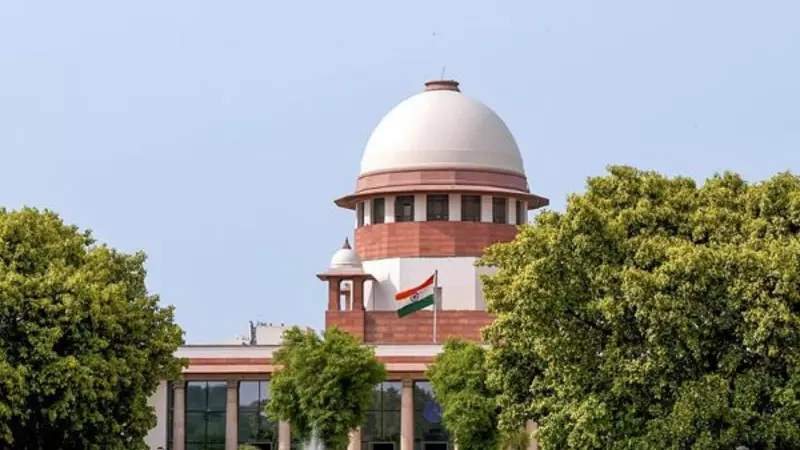
In a significant ruling underscoring the principles of natural justice, the Supreme Court of India has set aside an order by the Bombay High Court that cancelled the anticipatory bail of a man in an alleged cheating case. The apex court found the cancellation was done ex-parte, meaning in the absence of the accused or his legal representation.
Court Criticises Procedural Lapse
A bench comprising Justices Rajesh Bindal and Manmohan, while hearing the petition on December 22, 2025, took strong note of the procedural irregularity. The bench observed that a perusal of the High Court's impugned order clearly showed the anticipatory bail was cancelled without hearing the petitioner's side, as no one appeared on his behalf on the scheduled date.
The counsel for the petitioner explained the absence by stating that the state's application for bail cancellation was supposed to be tagged along with another similar application. It was pointed out that two separate applications seeking cancellation of the petitioner's bail were filed—one by the complainant and another by the State. The petitioner claimed he had been regularly appearing in the proceedings related to the other application.

Background of the Bail Dispute
The case originated from an alleged cheating incident where the accused was initially granted anticipatory bail by the High Court. Among the conditions imposed was a requirement for the accused to report to the police station every Monday. The bail was later cancelled after it was alleged that the man failed to comply with this condition, specifically by not attending the police station as directed.
Challenging this cancellation, the petitioner approached the Supreme Court, arguing that the order was passed without affording him a proper hearing.
Restoration and Remand for Fresh Hearing
Considering the ex-parte nature of the order, the Supreme Court bench decided to intervene. The court set aside the Bombay High Court's cancellation order and immediately restored the anticipatory bail granted earlier to the petitioner.
Furthermore, the bench remitted the case back to the High Court for a fresh consideration. The Supreme Court's order explicitly directed that the matter be heard afresh after granting a hearing to both the parties—the state and the accused. This ensures the legal tenet of 'audi alteram partem' (hear the other side) is strictly followed.
This ruling reinforces a fundamental legal safeguard, preventing the cancellation of crucial bail protections without giving the accused an opportunity to present their defence. The case will now proceed in the Bombay High Court with both sides presenting their arguments.