

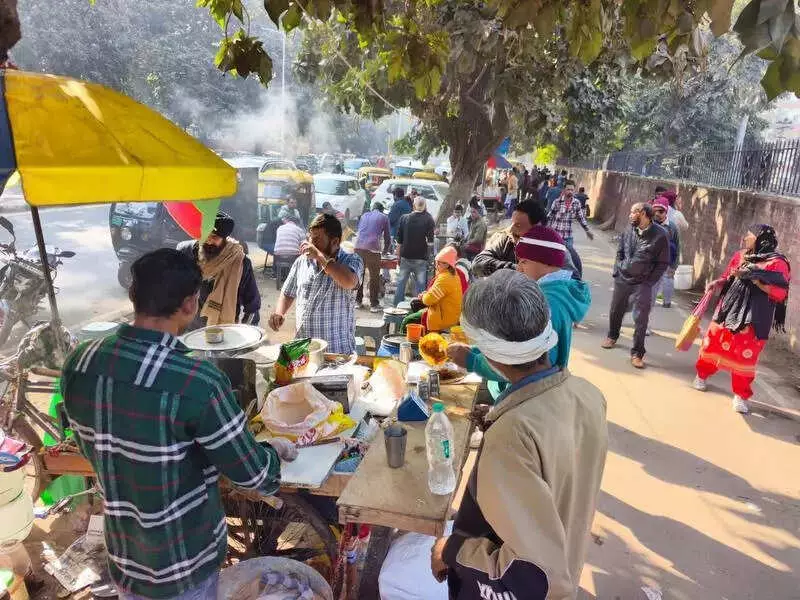
In a decisive move to address the long-standing issue of unauthorized street vending in Chandigarh, the Supreme Court of India has imposed strict deadlines on the Punjab and Haryana High Court and the local administration. The apex court has mandated the resolution of all pending applications related to the illegal occupation of public land by vendors within a matter of weeks.
Supreme Court's Directives: Tight Deadlines for Pending Cases
The Supreme Court bench, comprising Justice Sanjay Karol and Justice Nongmeikapam Kotiswar Singh, issued these directions on December 17. The court was hearing a Special Leave Petition (SLP) filed by associations based in Manimajra. The bench noted that approximately 50 cases are pending before the Punjab and Haryana High Court where interim stay orders are favoring the vendors. Additionally, around 170 cases are awaiting decisions with the Grievance Redressal and Dispute Resolution Committee of the Chandigarh administration.
The court explicitly requested the high court to take up these matters and decide on the interim applications as expeditiously as possible, and preferably within three weeks. Simultaneously, the Grievance Redressal Committee has been ordered to positively decide the pending matters before it within two weeks.

The Root of the Dispute: Petitioners vs. Vendors
The legal battle reached the Supreme Court after the petitioners – the presidents of the Manimajra Vyapar Mandal and the Residential Welfare Association, Manimajra – challenged orders from the Punjab and Haryana High Court dated May 23. Their grievance was against the Chandigarh administration for failing to remove encroachments by vendors and squatters on public paths, roads, and property.
In their petition, they argued that these unauthorized occupations were creating a nuisance, causing traffic hazards, and hindering the free use of public spaces. They also claimed that the vendors were adversely impacting the business of established shopkeepers and alleged that some vendors were part of a "mafia."
The high court's May order had dismissed their plea, showing sympathy towards the street vendors. The division bench observed that the court could not ignore an "elite class still following the British, who look down on their own countrymen doing small business and treat them as if they are mafias." Dissatisfied with this observation, the petitioners moved the Supreme Court.
Administration's Action and Upcoming SC Order
Beyond the court deadlines, the Supreme Court has also directed the Chandigarh administration to submit a detailed affidavit within two weeks. This affidavit must outline the actions taken regarding the removal of unauthorized vendors from public spaces and their subsequent shifting to allotted sites in designated vending zones. The administration had previously been given a week's time, from December 16 to 23, to initiate the removal process.
The Supreme Court bench, while reserving its final order in the matter, stated, "We also intend to pass certain interim directions," indicating that further instructions may follow to ensure compliance and a permanent resolution to the issue that affects the city's public infrastructure and local businesses.
The case highlights the ongoing tension between the right to livelihood of street vendors and the need for orderly urban management, with the Supreme Court now steering the process towards a time-bound legal conclusion.






