

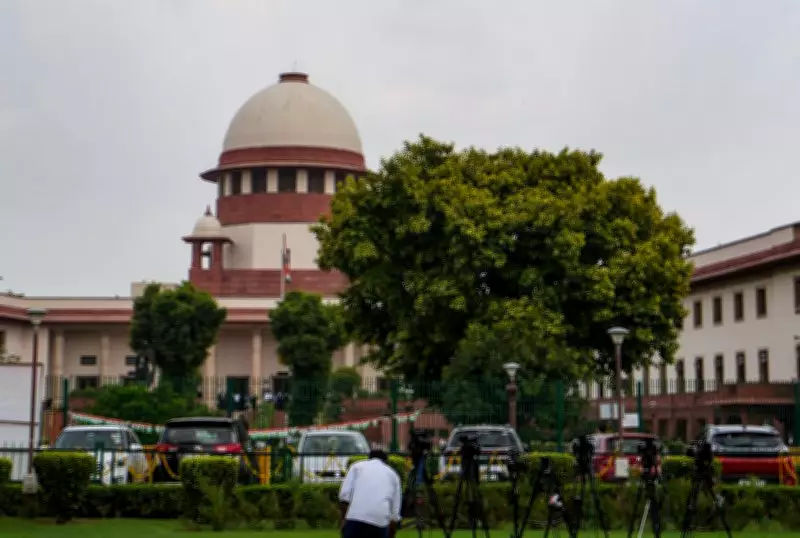
Supreme Court Takes Strong Stand Against Use of AI-Generated Fake Judgments in Andhra Trial Court
The Supreme Court of India has expressed grave concern and taken serious exception to a recent incident where a trial court in Andhra Pradesh relied on artificial intelligence (AI)-generated fake judgments while adjudicating a case. This unprecedented event has sparked a major debate within the legal community about the integrity of judicial processes and the potential misuse of emerging technologies in the courtroom.
Details of the Controversial Incident
According to reports, the trial court in Andhra Pradesh cited several judgments that were later found to be fabricated and generated by AI tools. These fake judgments were presented as legal precedents to support the court's ruling, raising alarm bells about the verification of sources in judicial proceedings. The Supreme Court, upon learning of this, has strongly criticized the lapse, emphasizing that such reliance on unverified and potentially fraudulent material undermines the very foundation of justice and the rule of law.
The apex court highlighted that this is not just a minor procedural error but a serious breach of judicial ethics that could have far-reaching consequences for the parties involved and public trust in the legal system. Judges are expected to exercise due diligence in researching and citing authentic legal authorities, and the use of AI-generated content without proper scrutiny represents a failure in this fundamental duty.

Broader Implications for the Judiciary and Technology Integration
This incident has brought to the forefront critical questions about the role of technology in the judiciary. While AI and digital tools can enhance efficiency and access to legal resources, their misuse poses significant risks. The Supreme Court's reaction underscores the need for strict guidelines and safeguards when incorporating technology into legal processes to prevent similar occurrences in the future.
Legal experts argue that this case serves as a wake-up call for courts across India to implement robust verification mechanisms for any external sources, including those derived from AI. It also points to the necessity of training judicial officers on the ethical use of technology, ensuring they can distinguish between authentic legal materials and AI-generated fabrications.
The Supreme Court has indicated that it may issue directives or recommendations to prevent such incidents, potentially including mandatory checks for AI-generated content in court filings and judgments. This move aims to preserve the sanctity of judicial proceedings and maintain public confidence in the legal system.
Reactions from the Legal Community and Government
The legal fraternity has reacted with shock and concern over this development. Many lawyers and judges have called for immediate action to address the vulnerabilities exposed by this case. They stress that while innovation should be encouraged, it must not come at the cost of compromising judicial accuracy and fairness.
Government officials have also taken note, with discussions likely to ensue about regulatory frameworks for AI use in legal contexts. This incident may prompt policy reviews to balance technological advancement with the imperative of upholding justice, ensuring that tools like AI are used responsibly and transparently in the judiciary.
In summary, the Supreme Court's strong stance against the Andhra trial court's reliance on AI-based fake judgments highlights a critical juncture for India's legal system. It calls for a careful reevaluation of how technology is integrated into judicial work, with a focus on maintaining integrity, authenticity, and trust in the pursuit of justice.






