Supreme Court Judges Deliver Split Verdict on Corruption Law Provision
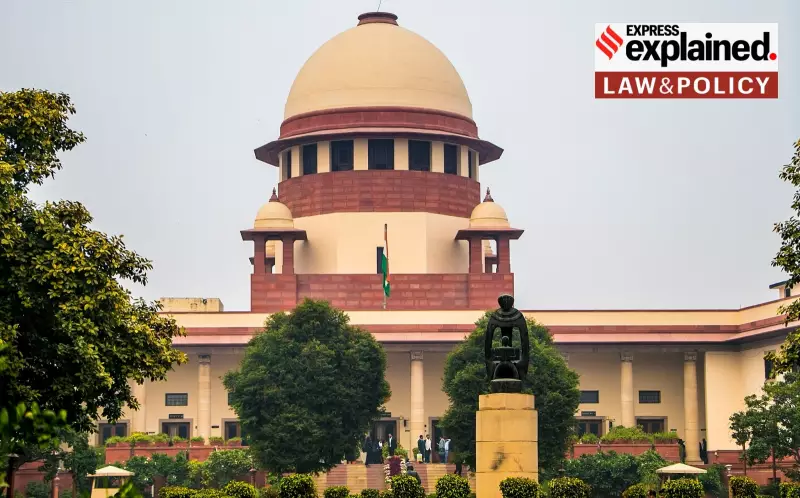
A two-judge bench of the Supreme Court gave a divided ruling on Tuesday. They examined the constitutionality of Section 17A of the Prevention of Corruption Act, 1988. This provision requires police to get government approval before investigating public servants for offenses linked to official decisions.
Contrasting Judicial Opinions Create Legal Deadlock
Justice K V Viswanathan chose to uphold the controversial section. He applied a "reading down" approach to save it from being struck down. His solution involves creating an independent screening mechanism through the Lokpal.
Justice B V Nagarathna took a completely different position. She declared Section 17A unconstitutional in its entirety. She argued it protects corrupt officials rather than honest civil servants.

The sharp disagreement means the case now moves to the Chief Justice of India. He will need to form a larger bench to resolve this legal impasse.
The Core Conflict: Protection Versus Prosecution
This judgment highlights a fundamental tension in administrative law. Authorities must balance empowering agencies to catch corrupt individuals with safeguarding honest officers from harassment.
Parliament introduced Section 17A in 2018 to address "policy paralysis." The concern was that bureaucrats might avoid bold decisions fearing that genuine mistakes could later be seen as corruption.
Justice Viswanathan strongly emphasized the need for this protection. He quoted Sardar Vallabhbhai Patel's famous description of civil servants as the "Steel Frame of India." Without basic assurances, he warned, public servants would adopt a "play it safe" approach.
"If honest public servants lack assurance that their decisions won't face frivolous complaints, the nation suffers," Justice Viswanathan wrote. He cautioned against "throwing the baby out with the bathwater" by striking down the provision completely.
Proposed Solution: Independent Screening Mechanism
Justice Viswanathan acknowledged a critical flaw in Section 17A's current form. The government holds exclusive power to grant or refuse investigation approval. This violates the independence principle essential for corruption probes.
His constructive approach preserves the prior approval requirement but removes government control. He directed that screening must occur through independent bodies—the Lokpal at the central level and Lokayuktas in states.
Under this interpretation, when police seek approval, the government must forward the request to the Lokpal. The Lokpal's Inquiry Wing would conduct a preliminary check. If they find a prima facie case, they recommend approval to the government, which must then comply.
Fundamental Constitutional Objections
Justice Nagarathna presented a starkly different analysis. She argued Section 17A contradicts the very purpose of the Prevention of Corruption Act. The provision "forestalls an enquiry and thereby protects the corrupt," she stated bluntly.
She criticized the government's role as an impartial arbiter. "Policy bias" and "conflict of interest" create serious problems, especially when investigations involve high-ranking officials or ministers.
Justice Nagarathna found the provision violates Article 14 of the Constitution, which guarantees equality. The law discriminates by requiring approval only for offenses related to "recommendations made or decisions taken." Lower-level officials performing clerical tasks receive no such protection.
She rejected Justice Viswanathan's Lokpal solution as "judicial legislation." Courts cannot substitute "Government" with "Lokpal" in statutory language, she argued.
Clashing Interpretations of Legal Precedents
The judges disagreed sharply on how to apply previous Supreme Court rulings. They examined Vineet Narain v. Union of India (1998) and Subramanian Swamy v. CBI (2014). Both cases struck down similar protections for senior officers.
Justice Nagarathna viewed Section 17A as "old wine in a new bottle." She argued it resurrects provisions already invalidated by the court. The core principle from earlier cases was that fetters on preliminary enquiries subvert investigations.

"If CBI cannot verify complaints through preliminary enquiry, how can cases proceed?" she quoted from previous judgments. Section 17A creates the same hurdle while extending it to all public servants.
Justice Viswanathan distinguished the current case from these precedents. He noted that earlier provisions discriminated based on officer rank, violating Article 14. Section 17A applies uniformly to all public servants, eliminating that discrimination.
The "spirit and essence" of previous rulings focused on preventing executive control over investigations, he argued. By introducing the Lokpal as an independent screener, this concern gets properly addressed.
Broader Implications for Anti-Corruption Efforts
This split verdict leaves crucial questions unanswered about India's anti-corruption framework. The disagreement reflects deeper philosophical divides about balancing protection and accountability.
Justice Nagarathna warned that Section 17A allows the government to hold a "Damocles' Sword" over officials. They might feel pressured to align with political executives to avoid investigation approvals.
Justice Viswanathan countered that without some protection mechanism, honest officers face constant vulnerability. This could paralyze administration and decision-making at all levels.
The matter now awaits resolution by a larger Supreme Court bench. Their decision will significantly impact how India investigates corruption among public servants while attempting to protect those serving honestly.