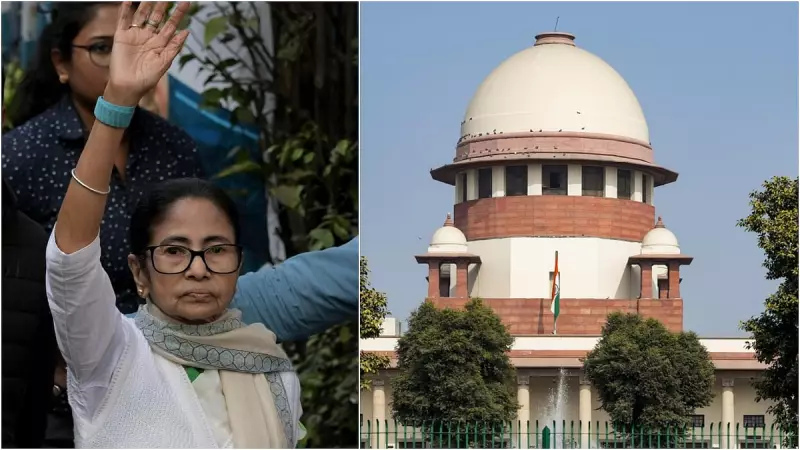
The Supreme Court of India has taken decisive action in the ongoing controversy surrounding Enforcement Directorate raids on the Indian Political Action Committee (I-PAC). In a significant development, the apex court has stayed an FIR filed against ED officers involved in the investigation. The court has also issued formal notices to West Bengal Chief Minister Mamata Banerjee, the state government, and other concerned parties.
Court Intervention in High-Profile Case
This legal intervention comes after the Enforcement Directorate made serious allegations against Chief Minister Mamata Banerjee. The probe agency claims that Banerjee personally entered the premises during the raids and removed what they describe as "key" evidence related to their investigation. These allegations have created a major political storm in West Bengal.
Background of the I-PAC Raids
The Enforcement Directorate conducted raids on I-PAC offices as part of a money laundering investigation. I-PAC is a prominent political consultancy firm that has worked with various political parties across India. The raids were part of a broader probe into alleged financial irregularities.

Following these raids, an FIR was registered against ED officers by the West Bengal Police. This prompted the Enforcement Directorate to approach the Supreme Court for relief. The agency argued that the FIR was an attempt to obstruct their legitimate investigation.
Supreme Court's Immediate Actions
The Supreme Court bench, after hearing preliminary arguments, decided to stay the FIR against the ED officers. This means the criminal proceedings against the investigating officers cannot proceed for now. The court has scheduled the matter for further hearing and has asked all parties to file their responses.
Legal experts suggest this stay order provides temporary protection to the ED officers while the court examines the larger constitutional questions involved. The case raises important issues about the relationship between central investigative agencies and state governments.
Political Implications in West Bengal
This development has significant political ramifications in West Bengal. The confrontation between the central agency and the state government has been escalating for months. Opposition parties have accused the central government of using investigative agencies for political purposes, while the ruling party in West Bengal claims it's facing harassment.
Chief Minister Mamata Banerjee has consistently denied any wrongdoing. Her administration maintains that the state police acted appropriately in registering the FIR against ED officers. The Supreme Court's intervention now puts these competing claims under judicial scrutiny.
What Happens Next?
The Supreme Court has given all parties time to prepare their detailed responses. Legal proceedings are expected to continue in the coming weeks. The court will need to balance several important considerations:
- The autonomy of central investigative agencies
- The rights of state governments
- Proper procedures for conducting investigations
- Protection of evidence in sensitive cases
Observers will be watching closely as this case develops. It could set important precedents for how similar conflicts between central agencies and state governments are handled in the future. The outcome may influence the working relationship between different levels of government in India's federal structure.
For now, the stay on the FIR provides breathing space to the Enforcement Directorate officers. However, the broader questions about the I-PAC raids and the alleged removal of evidence remain unresolved. All eyes are on the Supreme Court as it navigates this politically charged legal battle.