

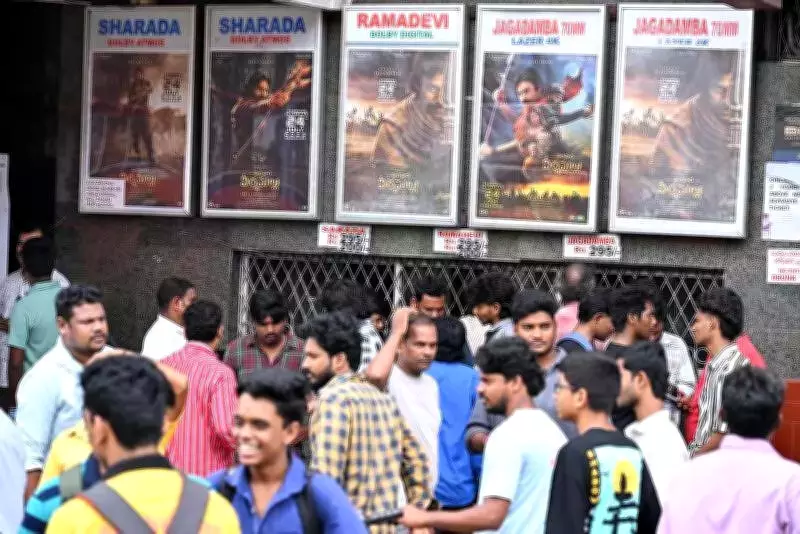
Supreme Court Grants Interim Relief to Film Production House in Ticket Pricing Case
In a significant development for the Telangana film industry, the Supreme Court of India on Friday issued a stay order against a directive from the Telangana High Court that mandated public disclosure of any decision regarding movie ticket price hikes ninety days prior to a film's release. This interim relief was granted to the prominent production house Mythri Movie Makers, which had challenged the high court's January order.
Legal Battle Over Ticket Price Transparency
A bench comprising Justices JK Maheshwari and Atul S Chandurkar passed the order while hearing a special leave petition filed by Mythri Movie Makers. The production house contested the high court's directions, arguing they could adversely impact all movie releases across the state of Telangana. The bench acknowledged these concerns, stating that the high court order was indeed affecting the petitioner negatively.
"Considering the aforesaid, operation of the high court order shall remain stayed in the case of the petitioner," the Supreme Court bench declared, effectively putting the disclosure requirement on hold for Mythri Movie Makers while the legal proceedings continue.

Origins of the Controversy
The Telangana High Court had issued its original order while adjudicating a separate petition filed by Dachepally Chandrababu. This petition specifically challenged the hike in ticket rates for the film 'Mana Shankara Vara Prasad Garu', starring veteran actor Chiranjeevi and leading actress Nayanthara. Chandrababu's contention prompted the high court to issue broader directions about transparency in ticket pricing decisions.
During the Supreme Court hearing, counsel for Mythri Movie Makers presented several critical arguments:
- The high court's directions had the potential to disrupt the entire film release ecosystem in Telangana.
- Provisions of the Telangana Cinemas Regulation Act were cited to argue that such far-reaching orders should not be passed without giving affected parties—movie makers and distributors—an opportunity to present their case.
- The counsel emphasized that the order could set a problematic precedent for the film industry's operational flexibility.
Broader Implications and Next Steps
The Supreme Court has also issued formal notices to multiple parties involved in the case, including the Telangana state government, the Telangana Film Development Corporation, and the original petitioner Dachepally Chandrababu. The apex court has decided to adjourn the matter and schedule it to be heard alongside a similar pending case, suggesting the issue has wider ramifications beyond this specific dispute.
This legal development highlights the ongoing tension between regulatory transparency and industry operational requirements. Film producers argue that last-minute pricing adjustments are sometimes necessary based on market conditions, production costs, and star power, while consumer advocates push for greater transparency in how ticket prices are determined.
The stay order represents a temporary victory for Mythri Movie Makers and potentially other production houses in Telangana, though the final resolution will depend on the Supreme Court's comprehensive hearing of the matter. The case continues to be closely watched by stakeholders across India's film industry, as its outcome could influence cinema regulation practices in other states as well.






