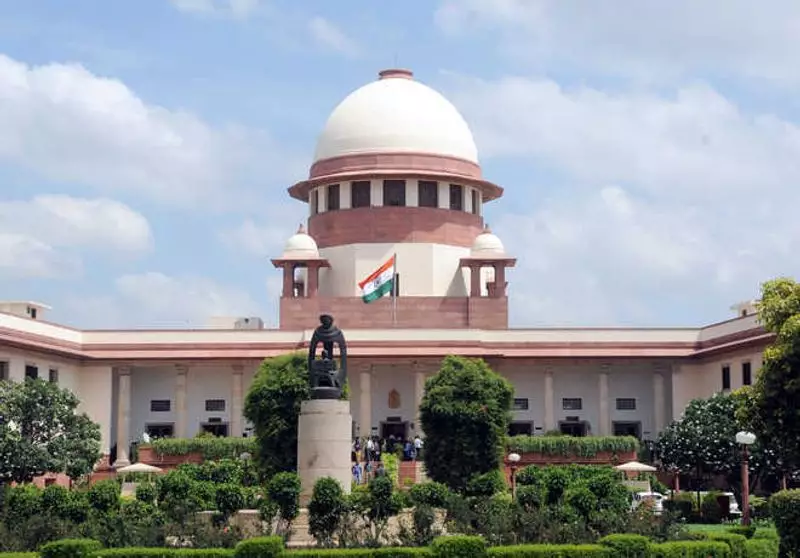
In a significant judgment that reinforces constitutional protections, the Supreme Court of India has delivered a powerful verdict safeguarding the rights of arrested individuals. The bench comprising Justices B.R. Gavai and Sandeep Mehta emphasized that police must clearly inform arrested persons about the specific grounds for their arrest and their entitlement to legal representation.
Court's Directives on Arrest Procedures
The Supreme Court bench explicitly stated that merely reading out the grounds of arrest from a piece of paper is insufficient. The arrested person must genuinely comprehend the reasons behind their detention. This requirement becomes particularly crucial when the arrest relates to multiple First Information Reports (FIRs), where the possibility of confusion is significantly higher.
The judgment highlighted that failure to properly communicate the grounds of arrest would render the detention illegal. This ruling came during the hearing of a petition filed by Babulal Paul, who challenged his arrest in connection with a money laundering case investigated by the Enforcement Directorate.

Legal Framework and Constitutional Safeguards
The court's decision firmly anchors itself in Article 22(1) of the Indian Constitution, which guarantees fundamental protections to arrested individuals. This constitutional provision mandates that no person who is arrested shall be detained without being informed of the grounds for such arrest, nor shall they be denied the right to consult and be defended by a legal practitioner of their choice.
Justice Gavai, writing the judgment, emphasized that the right to be informed about the grounds of arrest is not merely a procedural formality but a fundamental right essential for preparing an adequate defense. The court observed that this right becomes even more critical in cases where individuals face arrest for offenses under special statutes like the Prevention of Money Laundering Act (PMLA).
Broader Implications for Criminal Justice System
This landmark judgment has far-reaching consequences for law enforcement agencies across India. The ruling effectively strengthens the legal framework protecting citizens against arbitrary arrests and ensures that the constitutional safeguards are practically implemented rather than remaining theoretical protections.
The Supreme Court's directive serves as a crucial check on police powers and reinforces the principle that individual liberty cannot be compromised through procedural shortcuts. By mandating clear communication of arrest grounds, the judgment empowers arrested persons to exercise their legal rights effectively and challenge unlawful detention promptly.
Legal experts have welcomed this development as a significant step toward balancing state power with individual rights in the criminal justice system. The ruling emphasizes that transparency in arrest procedures is fundamental to maintaining public trust in law enforcement and upholding the rule of law.