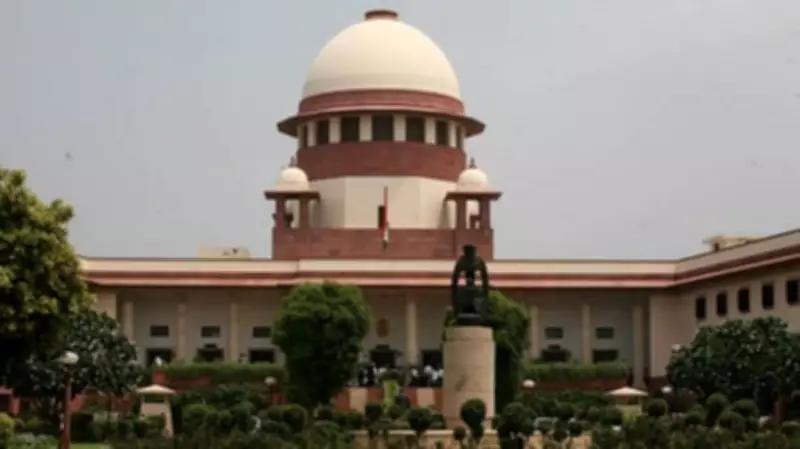
The Supreme Court on Tuesday directed the Central government to consider afresh the voluntary retirement plea of an IPS officer who had participated in protests against the Citizenship Amendment Act (CAA). The court observed that the government had not examined the complaints against the officer in detail before rejecting his notice for voluntary retirement on October 25, 2019.
Background of the Case
The IPS officer, whose identity has not been disclosed, had sought voluntary retirement from service. However, the Ministry of Home Affairs rejected his application, citing his involvement in the CAA protests as a disciplinary issue. The officer then approached the Supreme Court, challenging the rejection.
Supreme Court's Observations
A bench comprising Justices D.Y. Chandrachud and P.S. Narasimha noted that the government's order lacked a thorough examination of the complaints. The court stated, "The Central government did not examine the complaints in detail before rejecting the officer's notice for voluntary retirement." The bench directed the government to reconsider the plea within eight weeks, taking into account all relevant factors.

Legal Implications
The ruling underscores the importance of procedural fairness in administrative decisions. Legal experts believe that the judgment could set a precedent for similar cases involving government employees facing disciplinary action. The court emphasized that voluntary retirement cannot be denied arbitrarily, especially when the employee has a clean service record.
Reactions and Next Steps
The officer's lawyer expressed satisfaction with the order, stating that his client had served the nation diligently. The government has not yet commented on the directive. The case is expected to be heard again after the government's decision.
The Supreme Court's intervention highlights the need for transparent and reasoned decision-making in matters of public service.