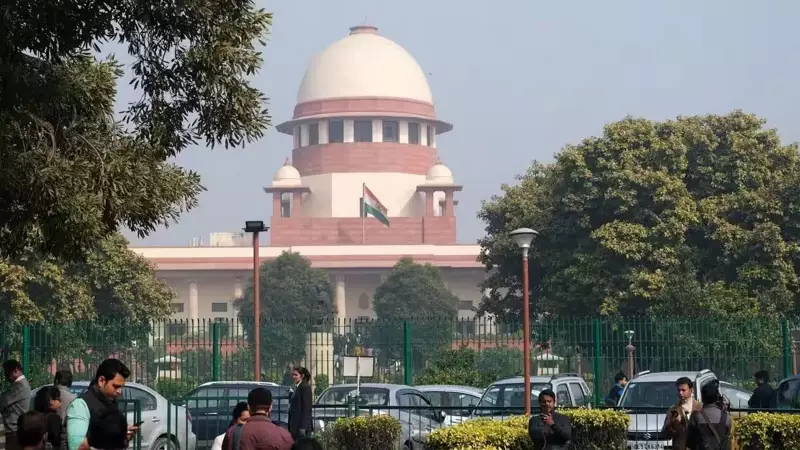
The Supreme Court of India agreed on Monday to examine a significant petition. This petition seeks the exclusion of the creamy layer from reservations meant for Scheduled Castes and Scheduled Tribes. A bench comprising Chief Justice of India Surya Kant and Justice Joymalya Bagchi took up the matter. They issued a formal notice to the Central Government regarding the plea.
Petitioner's Core Arguments
Advocate Ashwini Kumar Upadhyay filed the petition. He argued that the current system causes substantial public injury. Upadhyay stated that not implementing the creamy layer principle has wide-ranging negative effects. These effects span social, economic, political, and cultural spheres. He contends this situation violates several fundamental rights and directive principles enshrined in the Constitution.
The plea specifically mentions Articles 14, 15, 16, 17, 19, 21, 38, 41, 46, 51-A(j), and 335. According to the petitioner, the current approach threatens the constitutional goals of social justice, economic justice, and equal opportunity for all citizens.

Historical Context and Constitutional Intent
The petition delves into the original purpose of reservations. It asserts that reservation policies were never intended to become a permanent fixture in Indian society. Instead, the framers of the Constitution designed them as a temporary measure. Their goal was to provide socio-economic justice to historically oppressed communities.
Upadhyay's submission highlights the deep historical oppression faced by SC and ST communities. He notes that the Constituent Assembly recognized this unique disadvantage. Ordinary laws were deemed insufficient to address their plight. Therefore, special protections and opportunities were incorporated into the Constitution.
A key point in the plea is the provisional nature of reservations. The framers envisioned these benefits as subject to periodic review. They were meant to continue only as long as the conditions of disadvantage persisted. The system was designed to eliminate backwardness, not to perpetuate it indefinitely.
Linking to Previous Judgments and Pending Matters
The Supreme Court bench tagged this new plea with another pending petition. That earlier petition seeks priority reservation for economically weaker sections within categories already entitled to quotas.
This hearing follows a landmark judgment by a Constitution Bench of the Supreme Court. That judgment allowed the sub-classification of Scheduled Castes for reservation purposes. Critically, the bench in that case stated that the creamy layer principle should indeed be extended to Scheduled Caste reservations. This principle is already applied to Other Backward Classes (OBCs).
Call for Stringent Measures and Review
The current plea contends that granting excessive reservation without a strict creamy layer filter violates the spirit of the Constitution. It goes against principles of justice, equity, and good conscience. Upadhyay argues that the absence of periodic assessments makes the current reservation system counterproductive. He believes it works against the very constitutional goals of socio-economic justice and equal opportunity it was meant to promote.
The court's decision to hear this plea marks a crucial moment. It could lead to a major reinterpretation of India's reservation policy. The outcome will have significant implications for social justice and affirmative action in the country.