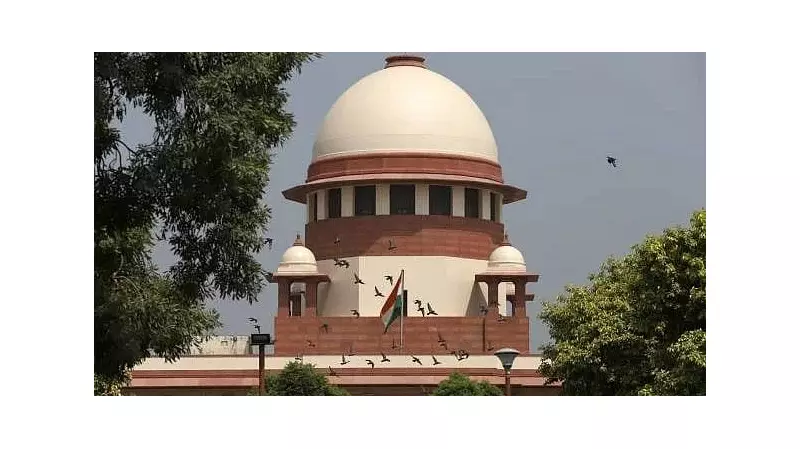
India's Supreme Court has taken a decisive step towards defining the constitutional responsibilities of Governors and the President concerning state legislation. The apex court has agreed to provide its opinion on a presidential reference seeking to establish clear timelines for these high offices to act on bills passed by state legislatures.
A Landmark Declaration on Gubernatorial Power
This significant development follows the court's strong reprimand of the Tamil Nadu Governor's conduct. In a powerful ruling, the Supreme Court declared that the Tamil Nadu Governor’s decision to withhold assent to 10 bills was "illegal" and "arbitrary." This judgment, delivered on 19 November 2025, underscored the necessity for constitutional functionaries to act within a reasonable timeframe, preventing legislative processes from being stalled indefinitely.
The Presidential Reference and Its Implications
The presidential reference now before the court seeks to codify this principle into a concrete framework. The core issue is the absence of specified deadlines in the Constitution for Governors or the President to grant assent, withhold assent, or return bills for reconsideration. This legal vacuum has often led to delays, creating administrative gridlock and, as seen in Tamil Nadu, provoking constitutional crises.
The Supreme Court's forthcoming opinion is expected to bring much-needed clarity to this grey area. Legal experts anticipate that the court will define what constitutes a "reasonable time" for Governors to exercise their powers, thereby ensuring that elected state governments can govern effectively without their legislative agenda being obstructed.
Broader Impact on Indian Federalism
The implications of this judicial intervention extend far beyond the specific case in Tamil Nadu. By addressing the presidential reference, the Supreme Court is poised to reinforce the foundations of cooperative federalism in India. The move is seen as a check on the potential misuse of power by appointed Governors, ensuring they function as constitutional facilitators rather than political obstacles.
The court's stance sends a clear message to all constitutional authorities: their duties must be discharged with diligence and without undue delay. This precedent is set to govern future interactions between state governments and Raj Bhavans across the country, promoting a more predictable and efficient legislative process.