Supreme Court Takes Up Challenge to Election Commissioners' Lifetime Immunity
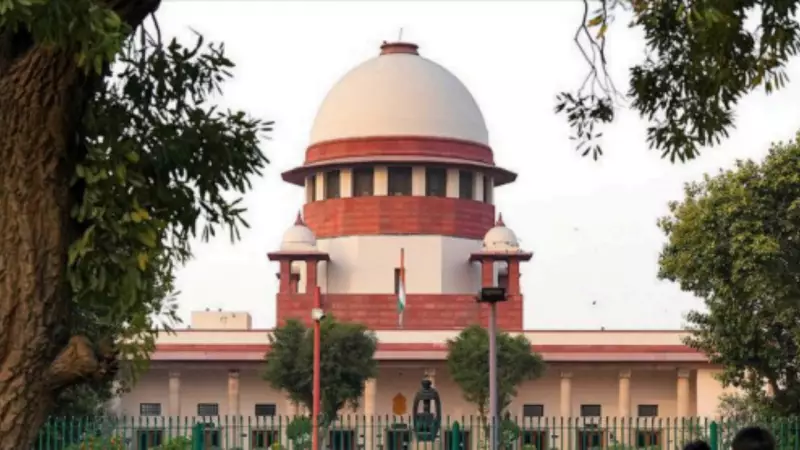
The Supreme Court of India has decided to examine a critical legal question. It will test the constitutional validity of a law that provides lifelong immunity from civil and criminal prosecution to the Chief Election Commissioner and election commissioners. This development follows a Public Interest Litigation filed by NGO 'Lok Prahari'. The PIL argues that such blanket immunity could transform the Election Commission into an unaccountable entity, operating above the law.
Court Issues Notices, Seeks Government and EC Response
After hearing arguments presented by S N Shukla on behalf of Lok Prahari, a bench comprising Chief Justice of India Surya Kant and Justice Joymalya Bagchi took decisive action. The bench formally issued notices to the Union government and the Election Commission of India. It directed both parties to submit their detailed responses to the court. The bench explicitly stated its intent on Monday, declaring, "We will examine whether it is constitutionally permissible to give CEC and ECs such immunity from prosecution." This sets the stage for a significant constitutional review.
PIL Challenges Section 16 of the 2023 Act
The NGO's petition specifically challenges Section 16 of The Chief Election Commissioner and Other Election Commissioners (Appointment, Conditions of Service and Term of Office) Act, 2023. This controversial section states that no court shall entertain or continue any civil or criminal proceedings against a serving or former CEC or election commissioner. This protection applies to any act, word, or thing committed in the purported discharge of official duty.

Advocate S N Shukla presented a compelling argument before the court. He referenced the Supreme Court's landmark judgment in the M S Gill case. In that ruling, the court granted the Election Commission independence and autonomy to conduct elections. However, it also cautioned that this autonomy should not render the Commission a "law unto itself." Shukla contended that the new immunity provision directly contradicts this principle.
The petitioner asserted that Section 16 enables the CEC and election commissioners to act without proper accountability. This, they argue, poses a serious threat to the conduct of free and fair elections. Such elections are the fundamental bedrock of a functioning democracy. The provision, according to the NGO, could jeopardize this core democratic requirement.
Allegations of Rushed and Unjustified Amendment
The PIL makes serious allegations about how this immunity clause became law. It claims Section 16 was not part of the original bill presented to Parliament in August 2023. Instead, the NGO alleges it was introduced surreptitiously as a last-minute amendment during the debate on the bill in December 2023.
The petition states that this was done "without giving any valid reason and adequate justification." It further alleges the amendment was not properly discussed during parliamentary debates. The approval of the House was obtained in a "rushed hush hush manner," and given "without application of mind." The government, the petitioner notes, provided no reason for the hurried inclusion of this immunity clause.
Broader Legal and Political Context
The NGO's challenge rests on several key legal principles. It argues that Section 16 violates the settled legal doctrine that no one is above the law. The petitioner also highlights a significant disparity. Such sweeping immunity is not available to other high constitutional functionaries like the President, state governors, or judges of the higher judiciary.
The issue has also entered the political arena. Leader of Opposition in the Lok Sabha, Rahul Gandhi, recently targeted the CEC and election commissioners. He stated that if the Congress party and its allies come to power at the Centre, they would disband this immunity provision. Furthermore, they would change the law retrospectively to hold officials accountable for any past electoral wrongdoings.

The petitioner concludes with a strong constitutional argument. It states that "the blanket permanent immunity from all civil or criminal proceedings" is fundamentally against the constitutional scheme and the intentions of India's constitution framers. The Supreme Court's decision to examine this matter marks a crucial step in determining the balance between institutional autonomy and legal accountability for the nation's top electoral body.