

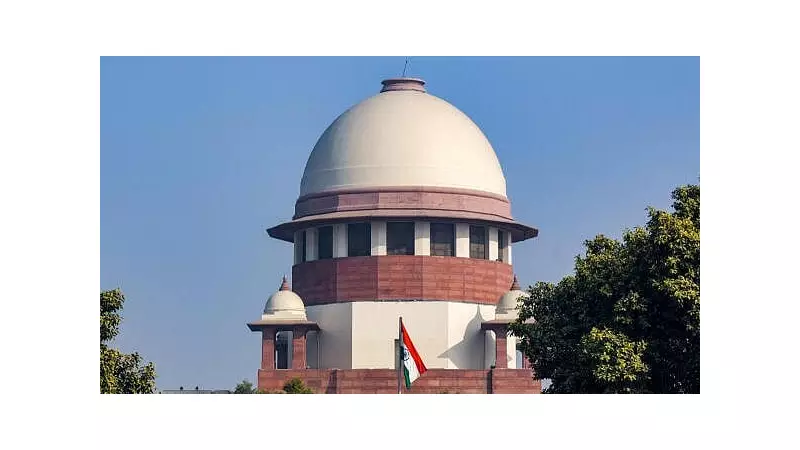
In a significant ruling reinforcing the scope of personal freedom, the Supreme Court of India has declared that the right to travel abroad and the right to hold a passport are integral facets of personal liberty protected under Article 21 of the Constitution. The judgment, delivered by a bench comprising Justices Abhay S Oka and Ujjal Bhuyan, came while setting aside a 2022 order by the Madhya Pradesh High Court.
The Core of the Judgment: Expanding Article 21
The apex court's bench was hearing an appeal against the Madhya Pradesh High Court's decision, which had dismissed a petition challenging the Regional Passport Office's refusal to issue a passport. The refusal was based on a pending criminal case against the petitioner. The Supreme Court meticulously examined the constitutional framework and existing precedents to arrive at its conclusion.
The court emphatically stated that the right to travel abroad and the right to hold a passport are inseparable from the fundamental right to personal liberty enshrined in Article 21, which guarantees that no person shall be deprived of life or personal liberty except according to procedure established by law. This interpretation broadens the protective umbrella of Article 21, placing international mobility firmly within its ambit.

Implications for Passport Impoundment and Refusal
This landmark pronouncement has direct and profound implications for how authorities handle passport issuance and impoundment. The court clarified that any action by the state to restrict these rights must pass the test of due process. Merely having a criminal case pending is not an automatic ground for denial or revocation of a passport.
The bench underscored that authorities must apply their mind to the specific facts of each case. They must consider factors such as the nature and severity of the alleged offence, the stage of the criminal proceedings, and whether the individual's travel abroad would genuinely impede the course of justice. A blanket refusal based solely on the existence of an FIR or a pending case is constitutionally unsustainable.
The Supreme Court directed the passport authorities to reconsider the appellant's application afresh, following the principles laid down in its judgment. It ordered that the decision be made within eight weeks, providing clear relief to the petitioner and setting a precedent for countless similar cases.
A Continuation of Progressive Jurisprudence
This judgment is not an isolated development but builds upon a rich legacy of Supreme Court rulings that have consistently expanded the interpretation of Article 21. The court has historically read various unarticulated rights into this article, including the right to privacy, dignity, and a clean environment.
By categorically including the right to travel abroad within this framework, the court has reaffirmed its role as the guardian of fundamental rights. It sends a strong message that personal liberty, in a globalized world, inherently includes the freedom of movement beyond national borders, subject only to reasonable, fair, and legally sound restrictions.
The ruling empowers citizens and provides a stronger legal shield against arbitrary state action concerning passport matters. It mandates a higher standard of scrutiny and procedural fairness from passport authorities and the police when they seek to curtail an individual's right to international travel. This decision is expected to influence numerous pending and future cases where citizens' passports have been impounded or applications rejected without sufficient justification.






