

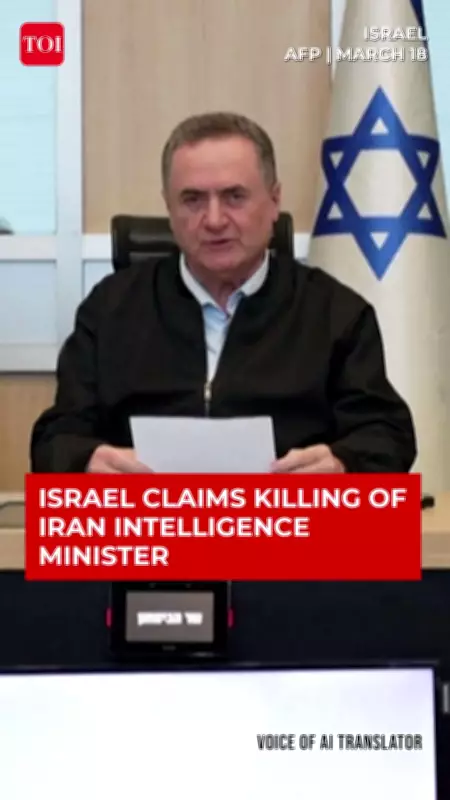
Israel Claims Killing of Iran's Intelligence Minister in Major Escalation
In a significant development that has heightened tensions in the Middle East, Israel's Defense Minister Israel Katz has publicly claimed responsibility for the killing of Iran's Intelligence Minister Esmail Khatib. The announcement, made on March 19, 2026, comes amid intensified military strikes between the two nations, marking a sharp escalation in their ongoing conflict.
Details of the Operation and Broader Campaign
According to Defense Minister Katz, Israeli forces carried out targeted strikes that resulted in the death of Esmail Khatib, a key figure in Iran's intelligence apparatus. Katz described this operation as part of a broader campaign aimed at dismantling Iranian leadership structures. This move represents a strategic shift, as Israel openly targets high-ranking officials, signaling a more aggressive posture in the conflict.
The killing of Khatib is seen as a major blow to Iran's intelligence capabilities, potentially disrupting its operations in the region. This incident follows a series of recent escalations, including missile exchanges and civilian casualties on both sides. Katz's statement underscores Israel's intent to directly confront Iranian leadership, rather than limiting actions to proxy forces or lower-level targets.

Context of Rising Tensions and Regional Implications
The announcement comes at a time of heightened hostilities, with both nations engaging in increased military actions. Recent reports have highlighted missile strikes from Iran targeting Israeli cities, resulting in civilian deaths and widespread panic. For instance, attacks in Holon and Bnei Brak have caused deadly blazes and casualties, further inflaming the situation.
This escalation is part of a broader pattern of conflict that has seen both sides ramping up their military postures. The killing of Khatib adds a new dimension, as it involves the direct targeting of a senior government minister, which could lead to retaliatory measures from Iran and potentially draw in other regional actors.
Potential Consequences and International Concerns
The death of Iran's Intelligence Minister is likely to have far-reaching implications:
- Increased Retaliation: Iran may respond with further missile strikes or covert operations against Israeli interests.
- Regional Instability: The conflict could spill over into neighboring countries, exacerbating existing tensions in the Middle East.
- International Diplomacy: Global powers may be forced to intervene to prevent a full-scale war, though current efforts have seen limited success.
As both nations brace for potential fallout, the international community watches closely, concerned about the risk of a broader regional war. The situation remains fluid, with developments expected to unfold rapidly in the coming days.






