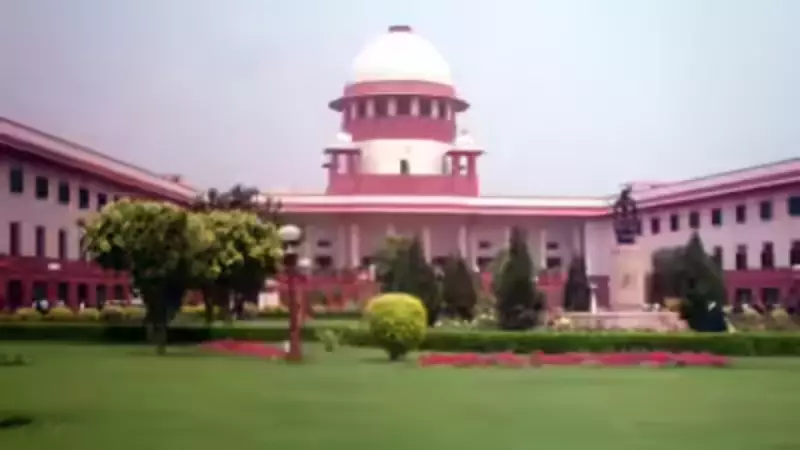
In a landmark ruling aimed at curbing the widespread misuse of a stringent child protection law, the Supreme Court of India on Friday urged the central government to introduce a "Romeo-Juliet" clause. This proposed amendment would shield genuine adolescent relationships from the harsh provisions of the Protection of Children from Sexual Offences (POCSO) Act.
A Call to Curb Legal Misuse
A bench comprising Justices Sanjay Karol and N Kotiswar Singh took judicial note of the rampant misuse of the POCSO Act. The court directed that a copy of its judgment be sent to the Secretary of the Law Ministry, Government of India. It asked the Centre to consider initiating steps to curb this menace, which includes the introduction of a clause to exempt genuine adolescent relationships and enacting a mechanism to prosecute those using the law to settle personal scores.
The bench, while acknowledging the POCSO Act as one of the "most solemn articulations of justice" for protecting children, expressed deep concern over its weaponization. It observed that the misuse highlights a societal divide where the underprivileged struggle for justice, while the privileged can manipulate the law for revenge.

High Courts Cannot Order Mandatory Age Tests at Bail Stage
In a significant legal clarification, the Supreme Court held that High Courts cannot order mandatory medical age determination of victims at the stage of granting bail in POCSO cases. This ruling came as the bench set aside specific directions issued by the Allahabad High Court.
The top court stated that the Allahabad High Court's order, which mandated police to conduct medical age-determination tests at the outset in every POCSO case, exceeded its jurisdiction under Section 439 of the Code of Criminal Procedure (CrPC). The Supreme Court emphasized that a bail court cannot conduct a "mini-trial" or issue investigative protocols that contradict existing laws.
The determination of a victim's age is a matter for trial, not for the bail court, the bench ruled. While a bail court may examine documents related to age, it cannot conclusively decide on their correctness, which is the trial court's domain.
Case Background and Broader Implications
The case reached the Supreme Court via an appeal by the Uttar Pradesh government against an Allahabad High Court order that granted bail to an accused in a sexual assault case allegedly involving a minor. While the Supreme Court set aside the High Court's directions on age tests, it left the bail grant itself undisturbed.
The verdict, authored by Justice Sanjay Karol, also underscored the ethical responsibility of lawyers to act as gatekeepers against frivolous or vindictive litigation. The court warned that unchecked misuse of laws like POCSO erodes public faith in the justice system.
The bench directed the Supreme Court's registrar (judicial) to share the judgment copy with the registrar general of the Allahabad High Court for necessary follow-up and to inform the concerned trial courts. This move ensures the ruling's principles are implemented at lower judicial levels.