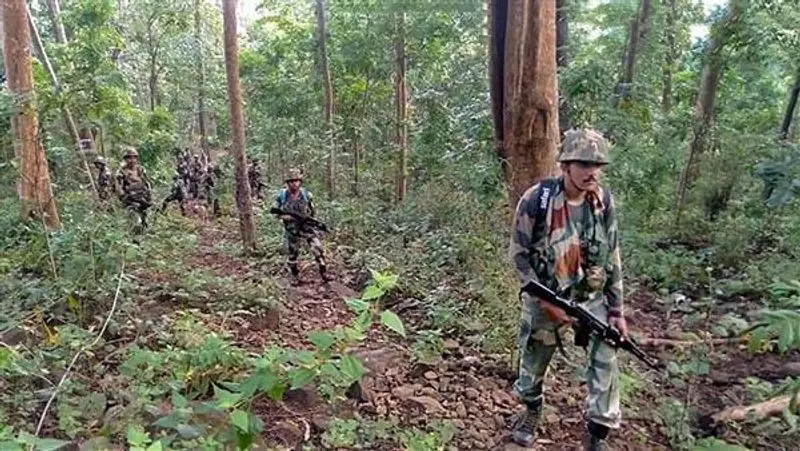
Security forces operating in the southern districts of Chhattisgarh continue to face a significant and persistent challenge from Maoist insurgents, according to recent assessments. The dense forests and difficult terrain of the Bastar region provide a formidable advantage to the armed groups, complicating counter-insurgency operations.
The Core of the Maoist Stronghold
The districts of Sukma, Bijapur, and Dantewada remain the epicenter of Maoist activity in the state. Despite sustained efforts by security personnel, these areas witness frequent encounters and incidents. The Maoists have entrenched themselves deeply in these regions, leveraging the remote and inaccessible geography to their benefit. Intelligence reports consistently highlight the southern zone as the most volatile and challenging theatre of operations in central India.
Operations are frequently launched based on specific intelligence inputs, but the element of surprise is often lost due to the insurgents' own network of informants and their intimate knowledge of the local landscape. This has led to a situation where security forces must exercise extreme caution during movements and raids, often slowing down the pace of advancement.

Terrain and Tactical Disadvantages
The operational hurdles are immense. The region is characterized by thick forests, hilly topography, and a lack of proper road connectivity. This environment is ideal for guerrilla warfare, allowing Maoist cadres to launch ambushes and melt away quickly into the wilderness. Improvised Explosive Devices (IEDs) pose a constant and deadly threat to security convoys and patrol teams, making every movement a high-risk endeavor.
Furthermore, the development deficit in these interior pockets is exploited by the Maoists to garner local support or enforce compliance. The security strategy, therefore, is not solely reliant on kinetic operations but also involves efforts to win hearts and minds through development initiatives and trust-building measures. However, the primary threat of violence remains a dominant concern.
The Path Forward: Security and Development
The long-term strategy to neutralize the challenge involves a two-pronged approach. While security forces maintain pressure through targeted operations, government agencies are tasked with accelerating infrastructure projects and delivering public services to these cut-off areas. The construction of roads, bridges, and cell towers is seen as crucial to improving accessibility and state presence.
However, these projects themselves become targets, requiring heavy security cover for construction workers and equipment. The cycle of violence and disruption thus continues to be a major impediment to peace and development in southern Chhattisgarh. The situation underscores a complex conflict where military might alone is insufficient without parallel progress on the socio-economic front.
Security analysts point out that the coming months are critical, especially with the onset of the monsoon season, which typically sees a tactical lull in major operations but an increase in IED-related incidents. The forces remain on high alert, acknowledging that the challenge in the south is deep-rooted and will require sustained, patient efforts to overcome.