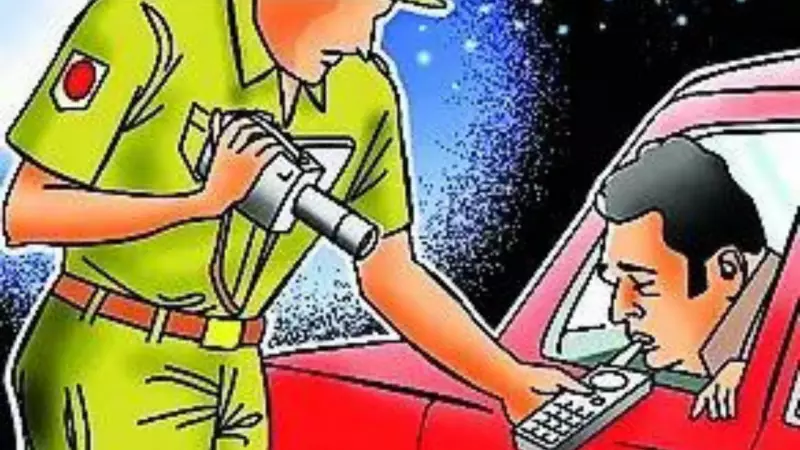
Starting next month, a significant upgrade is coming to the devices used by police and employers across India to test for drunk driving and workplace safety. The Department of Consumer Affairs has notified revised standards for breath analysers, mandating stricter accuracy and new features like built-in printers to bolster their credibility.
Key Features of the Upgraded Breath Analysers
The newly notified norms, which come into effect from April, introduce several critical changes. The updated breath analysers, used to measure blood alcohol concentration (BAC), must now adhere to strict limits on permissible error. A major new requirement is the built-in printing mechanism. In a significant move, the device will be designed not to function if the printing paper is absent. This ensures that every test conducted generates a printed record on the spot, which can be used for verification and as legal evidence.
Furthermore, to prevent confusion or manipulation during testing, the device will display only the final measurement result. Officials state that these measures are aimed at enhancing accuracy, consistency, and credibility of the devices, which are crucial for law enforcement and workplace safety protocols.

Boosting Enforcement and Public Trust
The revamped devices are engineered to provide rapid and reliable readings. This will enable police officers and other authorised personnel to make swift, well-informed decisions during roadside checks, thereby improving the efficiency of enforcement operations. Officials believe these technical upgrades will bolster public trust in the fairness of actions taken against drunk driving.
The norms fall under the amended Legal Metrology Rules. These rules also detail procedures for the initial verification and scheduled re-verification of the instruments. Regular checks will ensure that breath analysers maintain their accuracy throughout their operational life, even under rigorous field conditions.
A Long-Awaited Step for Road Safety
Traffic police in major Indian cities have increasingly depended on breath analysers to deter drunk driving, especially during late-night patrols and festive seasons. Road safety experts have welcomed the standardisation, calling it a long-overdue step. They have pointed out that inconsistent readings from older devices have often been challenged in courts, weakening prosecutions.
The new norms are expected to reduce legal disputes, strengthen the prosecution's case in drunk-driving incidents, and ultimately contribute to safer roads nationwide. By ensuring that every test is backed by a tamper-proof printed record, the system aims to leave little room for doubt or legal loopholes.