The Supreme Court of India on Wednesday raised serious concerns over the country's poor road-discipline practices, observing that India virtually has 'no concept of lane driving,' which it said is a major cause behind rising road accidents, as per a PTI report.
What Did the Supreme Court Say About Lane Driving?
A bench of Justices J B Pardiwala and K V Viswanathan made the remarks while hearing a long-pending public interest litigation (PIL) on road safety, filed in 2012 by surgeon S Rajaseekaran, who had raised concerns about the alarming number of road accidents in the country. The court noted that lane discipline is largely absent on Indian roads, leading to frequent accidents. 'How do you ensure in this country that drivers do not do away with lane driving? There is no concept of lane driving in this country. Most of the accidents occur due to that,' Justice Pardiwala observed, further adding that 'Lane driving is something which will reduce accidents considerably.'
What Directions Has the Court Issued?
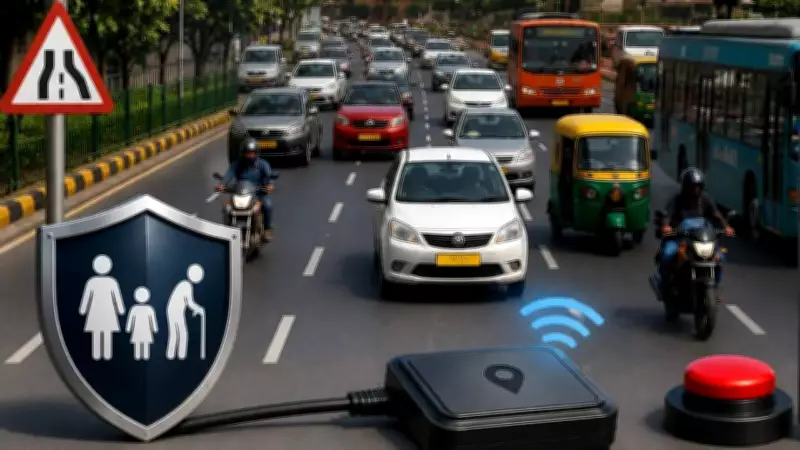
The court directed all states and Union Territories (UTs) to strictly enforce Rule 125H of the Central Motor Vehicles Rules, 1989, by ensuring the installation of Vehicle Location Tracking Devices (VLTDs) and emergency buttons in both new and existing public transport vehicles in a time-bound and verifiable manner. The bench said no public transport vehicle can be granted a fitness certificate or transport permit unless it is fitted with VLTDs and emergency buttons. It also directed the Centre to hold talks with manufacturers to ensure such devices are installed at the time of manufacturing.

The court further directed that VLTD installation and functionality must be integrated with the Vahan app and portal for real-time compliance monitoring.
On the issue of speed governors, the bench dealt with the matter separately, expressing displeasure over states failing to submit compliance reports on speed-limiting devices (SLDs). It directed all states to file fresh comprehensive affidavits setting out SLD compliance, supported by Vahan and Parivahan portal statistics, and reiterated that all manufacturers are bound to fit SLDs in public transport vehicles.
What Are VLTDs and Panic Buttons?
VLTDs are GPS-based tracking systems that allow authorities to monitor a vehicle's location in real time. Panic buttons are emergency alert systems installed inside vehicles, enabling passengers to raise an alert and seek immediate help. The court said these measures are especially important for the safety of women, children and elderly passengers.
Why Is the Court Concerned?
The Centre had made these safety devices mandatory in 2018, but the court noted that only around 1 per cent of public transport vehicles currently have them installed. The court also expressed strong displeasure over the fact that despite earlier orders, a national road safety board has not yet been constituted. It granted the Centre a last opportunity to set it up within three months. The bench made clear that compliance must be verifiable, device-linked, and reflected in national databases — not just reported on affidavit.
About the Author
The TOI Legal Desk is a dedicated team of journalists committed to tracking and reporting on courts, legal developments, and judicial proceedings across the country and world.