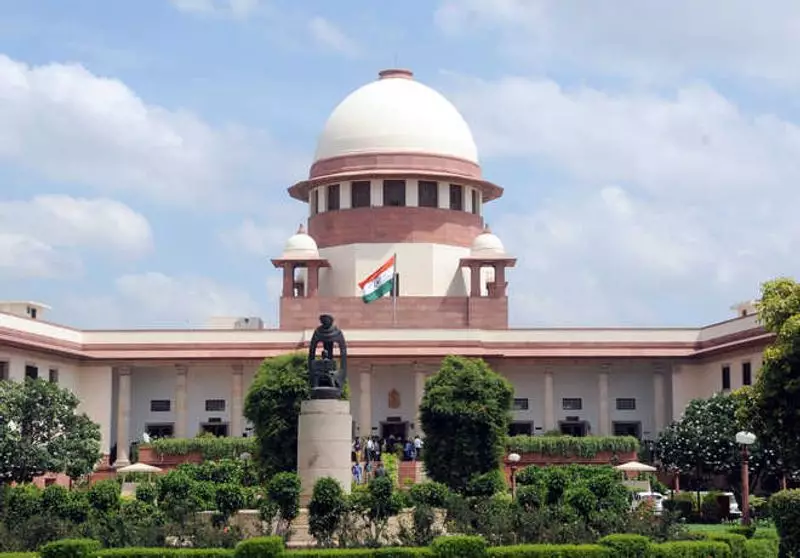
The Supreme Court of India has granted bail to four individuals, including Fatima Haider, in a case connected to the 2020 Northeast Delhi riots. This decision comes with a stringent set of 11 conditions aimed at ensuring the integrity of the ongoing judicial process.
Supreme Court's Bail Order and Key Conditions
A bench comprising Justices Bela M Trivedi and Pankaj Mithal approved the bail pleas of Fatima Haider, Athar Khan, Mohammed Umar, and Mohammed Danish. The court's order, issued on a recent date, mandates that the accused must adhere to a series of strict rules while out on bail.
The 11 conditions imposed by the Supreme Court are designed to prevent any potential interference with the investigation or influence on witnesses. Among the key stipulations are that the accused must not leave the National Capital Territory (NCT) of Delhi without prior court permission. They are also strictly prohibited from making any public statements or engaging with media regarding the facts of the case.
Furthermore, the individuals must surrender their passports and are forbidden from contacting any of the prosecution witnesses. They are required to regularly report to the local police station and must not be involved in any other criminal activity while on bail. The court made it clear that any violation of these conditions would lead to the immediate cancellation of their bail.
Background of the Case and Legal Proceedings
The case against Haider and the three others is rooted in the communal violence that erupted in Northeast Delhi in February 2020. The allegations against them fall under the stringent Unlawful Activities (Prevention) Act (UAPA) and other sections of the Indian Penal Code.
The legal journey for the accused has been prolonged. They had initially approached the Delhi High Court seeking bail, but their pleas were rejected. Following this denial, they moved the Supreme Court, which has now granted them relief, albeit with the comprehensive set of conditions.
The Supreme Court bench, while hearing the arguments, considered the nature of the allegations, the period of incarceration already undergone by the accused, and the status of the investigation. The court's decision to grant bail underscores the legal principle of "bail being the rule and jail an exception," while simultaneously balancing the need to safeguard the investigative process in a sensitive case.
Implications and Future Course of Action
This bail order is a significant development in one of the many cases stemming from the 2020 Delhi riots. It highlights the judiciary's role in meticulously weighing personal liberty against the demands of justice in complex cases involving serious charges.
The imposition of strict conditions acts as a safeguard for the prosecution. It ensures that the released individuals do not tamper with evidence or intimidate witnesses, which are common concerns in such high-profile cases. The trial in the main case will continue independently in the lower court.
Legal experts point out that bail under the UAPA is often difficult to secure, making this order noteworthy. The prosecution will now proceed with framing charges and presenting evidence before the trial court. The accused, meanwhile, must comply meticulously with all court-mandated conditions to retain their freedom during the trial's pendency.
The 2020 Delhi riots remain a deeply polarizing event in recent Indian history, with numerous cases still winding their way through the judicial system. This Supreme Court order adds another layer to the ongoing legal narrative surrounding the violence and its aftermath.