

Surat Police Crack 18-Year-Old Murder Case with Ingenious ATM Surveillance Operation
In a remarkable display of persistence and investigative acumen, the Surat police have finally closed a murder case that had remained unsolved for nearly two decades. The breakthrough came not from a dramatic tip-off, but from a seemingly mundane bank transaction that led officers to a remote forested area in Jharkhand.
The Long-Dormant Case and the Crucial Lead
The case dates back to October 12, 2008, when a man named Bablu, who sold water pouches and bottles at Surat railway station, was allegedly murdered over a debt of just Rs 50. The accused, Rakesh Roshan alias Rajesh Roshan, now 36, and his associate Amit had reportedly lent Bablu the money. When Bablu requested more time to repay, the duo returned around midnight near Khand Bazar and allegedly killed him.
For 18 years, Roshan evaded capture by constantly shifting locations across West Bengal, Bihar, Uttar Pradesh, Jharkhand, and other states, working various jobs to stay under the radar. However, the police never fully closed the file. "During our ongoing drive to trace absconders, we got information about him and later his bank records," explained Varachha police inspector RB Gojiya.

The turning point was a bank transaction that revealed Roshan frequently used an ATM kiosk approximately 15 kilometers from his residence in Dumka district, Jharkhand. This clue, emerging from routine police work, provided the first tangible lead in years and set the stage for a meticulously planned operation.
The Covert Surveillance and Dramatic Chase
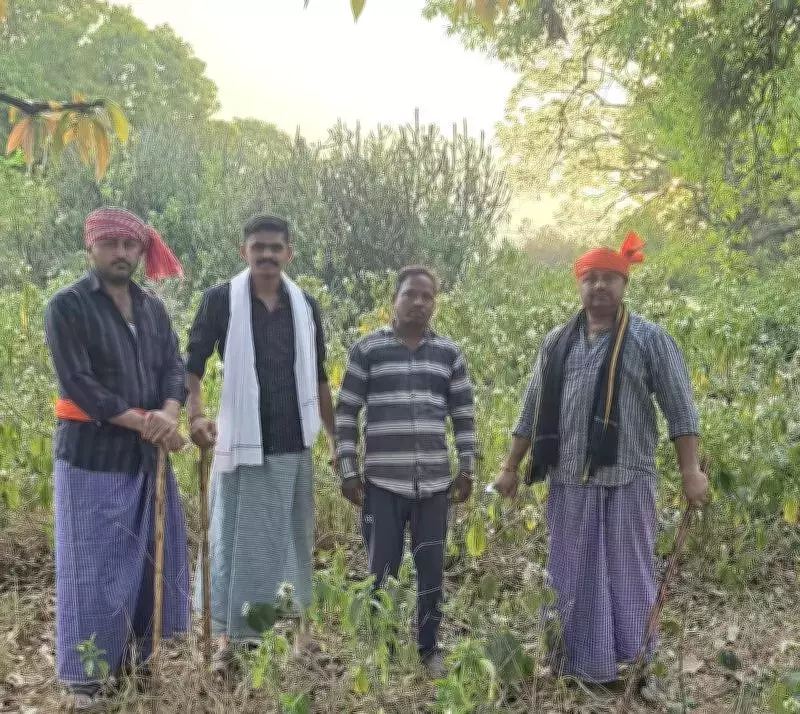
Convinced they were closing in, a dedicated police team launched a clandestine operation. For seven days, three constables—Vijaysinh, Sandipbhai, and Vasurbhai—maintained discreet surveillance at the ATM. To blend in with the local environment, they disguised themselves in tribal attire, wearing lungis, shirts, and chappals, while keeping a watchful eye on the kiosk.
Their patience was rewarded when Roshan finally appeared to withdraw money. However, upon noticing the police presence, he grew suspicious and attempted to flee, sparking a tense 5-kilometer chase through rugged forest terrain. "Our team did not want to miss the opportunity, as he had turned up after seven days," noted Inspector Gojiya.
The chase was particularly challenging due to Roshan's slim and agile build, which allowed him to run swiftly. Fortunately, the police team included Constable Sandipbhai Sanga, a trained sprinter with experience in marathons and school-level running events. Sanga took the lead, pursuing Roshan relentlessly until he was finally apprehended, bringing the long manhunt to a dramatic conclusion.
Implications and Broader Context
This arrest underscores the importance of persistent investigative efforts and the innovative use of financial records in solving cold cases. The Surat police's ability to leverage a simple bank transaction to track down a suspect who had eluded capture for 18 years highlights advancements in law enforcement techniques, even in seemingly forgotten cases.
Inspector Gojiya emphasized that the operation was part of a broader drive to trace absconders, demonstrating a commitment to justice regardless of the time elapsed. The case also serves as a reminder of the human element in policing, where the physical prowess and dedication of officers like Constable Sanga can be decisive in critical moments.
As Roshan now faces charges for the 2008 murder, this successful operation not only brings closure to a long-standing case but also reinforces public confidence in the police's ability to pursue justice relentlessly, no matter how much time has passed.






