Tamil Nadu Challenges High Court Verdict on Reservation for Converts to Islam
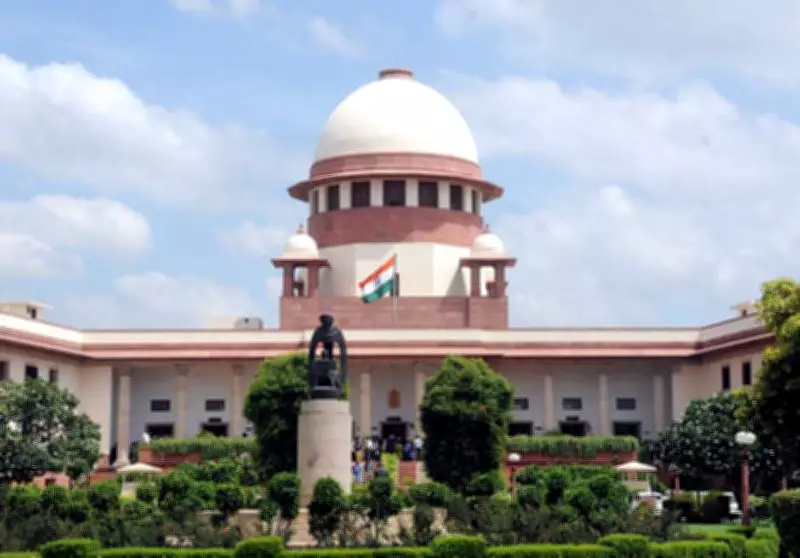
The Tamil Nadu government has approached the Supreme Court, contesting a Madras High Court judgment that ruled individuals converting to Islam are not automatically entitled to reservation benefits under the Backward Class (Muslim) category. The appeal, filed by the Secretary to the Tamil Nadu Government, challenges the high court's decision to declare unconstitutional a Government Order (GO) issued on March 9, 2024, which addressed this contentious issue.
This marks the third instance where the ruling TVK government has challenged a Madras High Court order before the Supreme Court on matters involving religion. Earlier, the state moved the top court against the high court's ruling in the Thiruparankundram temple lamp-lighting case and the blanket ban on cow slaughter imposed based on an August 1976 government order.
Background of the Controversy
The dispute originated from a petition filed in 2022 by Sameer, originally named Paramasivam, who was born into a Hindu family and converted to Islam in 2015. He approached the Madras High Court after a Tahsildar rejected his application for a BC-Muslim (Muslim Lebbai) community certificate. The high court's verdict, which invalidated the state's GO, has significant implications for reservation policies in Tamil Nadu.

The GO in question allowed individuals converting to Islam from Backward Classes, Most Backward Classes, Denotified Communities, or Scheduled Castes to be classified as BC (Muslim) and receive a community certificate for reservation benefits. The order specifically listed seven Muslim sects recognized as Backward Classes under the Tamil Nadu Backwards Classes, Scheduled Castes and Scheduled Tribes (Reservation of Seats in Educational Institutions and of Appointments or Posts in the Services under the State) Act, 1993: Ansar, Dekkani Muslims, Dubekula, Labbais (including Rowthar and Marakayar), Mapilla, Sheik, and Syed.
High Court's Reasoning
The Madras High Court, however, held that the GO contradicted established judicial precedents from both the Supreme Court and the high court itself. It emphasized that a person converting to Islam can only be treated as a Muslim, not automatically as a member of a specific backward caste. The court noted that communities like Labbai, Rowther, and Marakkayar are birth-based, meaning their status is determined by lineage rather than religious affiliation. Consequently, the high court ruled that an executive order cannot override binding judicial decisions.
According to the high court, the state's GO was unconstitutional because it sought to grant reservation benefits based solely on religious conversion, bypassing the requirement of community membership by birth. The court underscored that reservation policies are designed to address historical disadvantages faced by specific communities, not individuals who convert to a religion.
Impact and Next Steps
The Tamil Nadu government's appeal to the Supreme Court seeks to reverse this decision, arguing that the high court's interpretation undermines the state's authority to formulate reservation policies for backward classes. The outcome of this case could have far-reaching consequences for similar policies across India, particularly in states with significant Muslim populations and existing reservation frameworks.
The Supreme Court is expected to hear the matter in due course, with both sides likely to present detailed arguments on the interplay between religious conversion and caste-based reservation. The case also raises broader questions about the criteria for determining backwardness and the role of executive orders in shaping social justice policies.