Telangana High Court Mandates Sweeping Footpath Clearance in Hyderabad
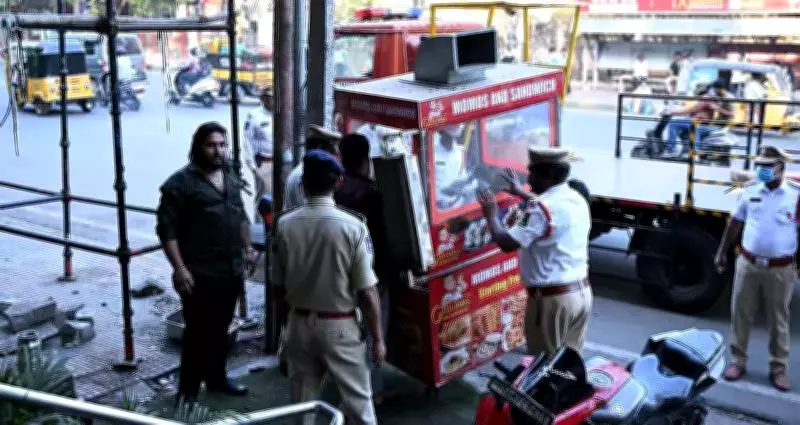
In a decisive move to reclaim public spaces, the Telangana High Court issued a sweeping order on Thursday, directing the Greater Hyderabad Municipal Corporation (GHMC) to identify and remove all footpath encroachments across the city. The court emphasized that no fresh violations should be permitted, aiming to restore pedestrian infrastructure to its original form.
Court Dismisses Petition, Orders Immediate Action
Justice NV Shravan Kumar delivered the directive while dismissing a petition that sought to halt the demolition of encroachments in Bagh Lingampally. Upholding the civic body's actions, the court ordered an immediate city-wide drive to clear footpaths. Authorities have been instructed to file a compliance report with the court registry within three months of receiving the order copy.
Observing the deteriorating state of pedestrian infrastructure in Hyderabad, the court remarked that footpaths had largely 'faded from public consciousness,' forcing citizens onto busy roads and exposing them to serious traffic risks. This highlights a critical public safety issue that has been neglected over time.

Inquiry into Official Lapses and Governance Failures
The court also directed GHMC to initiate an inquiry against officials who failed to implement Supreme Court and high court guidelines mandating that footpaths be kept clear for pedestrians. Coming down heavily on both the petitioner and municipal authorities, the judge observed that long-standing judicial mandates had been blatantly violated.
The case pertained to a residential flat purchased in 2010, measuring 700 square feet in Bagh Lingampally, which was allegedly extended illegally to 1,052 square feet to set up commercial shops on a public footpath. The petitioner argued that payment of commercial property tax since 2016 legitimized the structure. However, the bench made it clear that payment of taxes does not confer a legal right to encroach upon public land nor does it curtail the authority of civic bodies to demolish illegal constructions.
Court Criticizes 'Event-Based' Approach and Bad Governance
The court expressed serious concern over the conduct of municipal authorities, noting that officials continued to collect commercial taxes for years despite an apparent mismatch between the registered sale deed and the ground reality. No action was initiated until a third-party complaint was filed, a failure the court described as a 'governance lapse.'
The bench recalled that both the high court and the Supreme Court have repeatedly directed authorities to keep footpaths free for pedestrians. It held that the petitioner's unauthorized expansion, coupled with official inaction, amounted to a 'deliberate and continuing violation' of court orders.
Criticizing what it termed an 'event-based' approach to anti-encroachment drives, the court stressed that protection of public infrastructure must be a sustained administrative responsibility, not an occasional exercise. Concluding that the petitioner's claims lacked merit, the court held that the illegality had been allowed to continue due to 'bad governance.'
This ruling underscores the judiciary's firm stance on enforcing public space laws and holding authorities accountable for lapses in governance. It sets a precedent for other cities to follow in ensuring pedestrian safety and urban planning compliance.