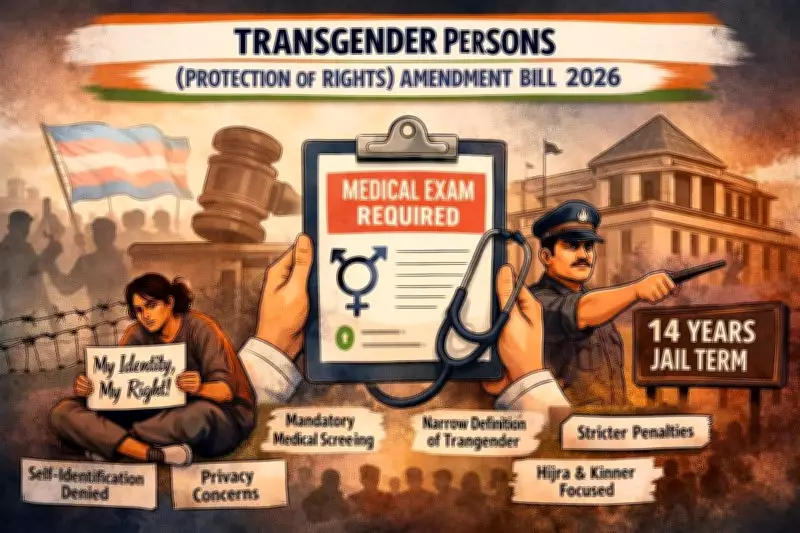
Transgender Rights Amendment Bill 2026 Ignites Legal and Ethical Controversy
The Transgender Persons (Protection of Rights) Amendment Bill, 2026, has reignited a major debate within India's legal and social framework, raising profound questions about the balance between state regulation and individual dignity. This legislative proposal has sparked intense discussions among legal experts, activists, and policymakers, highlighting the complex intersection of identity, rights, and governance.
From 2019 Legislation to 2026 Amendment
The legal journey of transgender rights in India has been marked by significant milestones. The original 2019 law represented a crucial step toward recognizing and protecting transgender individuals, establishing basic rights and protections. However, the 2026 amendment bill proposes substantial changes that have become the center of heated debate.
The core controversy revolves around a fundamental question: Can the State regulate personal identity without violating individual dignity and constitutional rights? This tension between governmental authority and personal autonomy has created a complex legal landscape that demands careful examination.

Constitutional Tensions and Legal Evolution
The amendment bill has brought several constitutional issues to the forefront:
- Right to self-identification versus state verification processes
- Balancing protection mechanisms with personal autonomy
- Implementation challenges of existing provisions
- Alignment with international human rights standards
Legal experts point to the evolving nature of transgender rights jurisprudence in India, noting how court decisions have progressively expanded recognition while the legislative framework attempts to establish clear guidelines and protections.
Why This Matters for Civil Services Aspirants
For those preparing for civil services examinations, understanding this debate is crucial for several reasons:
- It represents a contemporary governance challenge involving fundamental rights
- The issue demonstrates the dynamic relationship between legislation and social change
- It provides insight into policy-making processes and stakeholder consultation
- The debate highlights the practical implementation challenges of progressive legislation
The ongoing discussion surrounding the 2026 amendment bill serves as a valuable case study in constitutional law, social policy, and governance mechanisms that are highly relevant for competitive examinations and public service careers.
As the debate continues to unfold, the Transgender Persons (Protection of Rights) Amendment Bill, 2026, remains a significant focal point for discussions about identity, rights, and the appropriate role of the state in regulating personal matters while protecting vulnerable communities.