

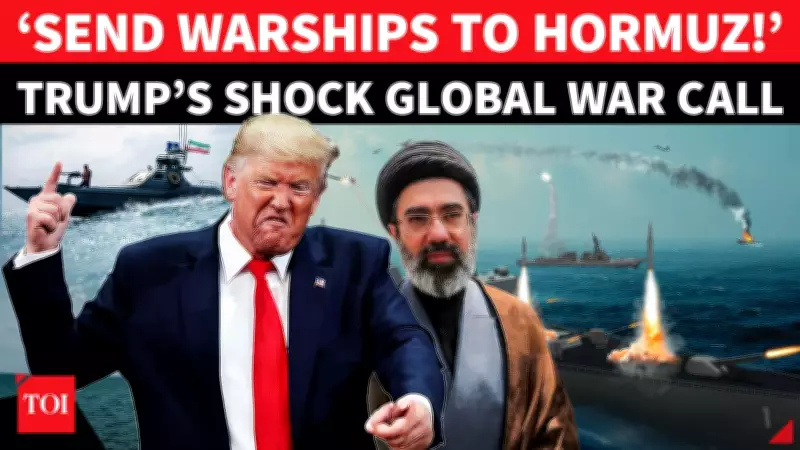
Trump Calls for International Naval Deployment to Strategic Strait of Hormuz
In a significant development that could reshape global maritime security, former U.S. President Donald Trump has issued a public call for major world powers to deploy their naval forces to the Strait of Hormuz. This strategic waterway, recognized as one of the planet's most vital energy chokepoints, has become a focal point of escalating tensions involving the United States, Iran, and Israel.
Urgent Appeal on Social Media Platform
Through a post on his Truth Social platform, Trump specifically urged nations that rely heavily on oil shipments from the Persian Gulf region to contribute warships to patrol the corridor alongside American naval assets. The former president emphasized the critical importance of keeping this maritime passage open and secure for international commerce, particularly for the uninterrupted flow of crude oil.
Rising Tensions and Declining Shipping Traffic
The call for increased naval presence comes amid reports of decreasing shipping traffic through the strait due to growing security concerns. Multiple sources indicate that commercial vessels are becoming increasingly hesitant to navigate these waters as geopolitical tensions continue to boil over. The situation represents a potential flashpoint that could significantly impact global energy markets and international trade routes.

The Strategic Importance of Hormuz
The Strait of Hormuz holds unparalleled strategic significance in global energy transportation:
- Approximately one-fifth of the world's total oil consumption passes through this narrow waterway daily
- The channel serves as the primary maritime route for oil exports from major producers including Saudi Arabia, Iraq, the United Arab Emirates, and Kuwait
- Any disruption to traffic through Hormuz could trigger immediate price spikes in global oil markets
- The waterway's narrow geography makes it particularly vulnerable to blockades or military actions
Broader Geopolitical Context
This development occurs against a backdrop of heightened regional tensions that have been building for months. The complex geopolitical landscape involves multiple actors with competing interests in the Persian Gulf region. Security analysts note that the situation represents one of the most volatile maritime security challenges currently facing the international community.
The call for a multinational naval coalition underscores the growing recognition that securing this critical waterway requires coordinated international effort rather than unilateral action. How various nations respond to this appeal will likely shape maritime security arrangements in the region for the foreseeable future.
As the situation continues to evolve, energy markets worldwide are closely monitoring developments in the Strait of Hormuz, aware that any significant disruption could have immediate and far-reaching consequences for global energy supplies and economic stability.






