

Ramin Jahanbegloo published this opinion piece on January 16, 2026, at 09:23 PM IST. He argues that American President Donald Trump is repeating a grave historical mistake.
A Dangerous Historical Parallel
One dark chapter in 20th-century European diplomacy involved Neville Chamberlain's policy of appeasement toward Nazi Germany. This culminated in the 1938 Munich Agreement, where Chamberlain ceded Czechoslovakia's Sudetenland to Adolf Hitler. He hoped this concession would prevent a larger war.
Nearly ninety years later, President Trump appears to be making the same strategic error with Iran. He is engaging in a risky "if and then" game with the Iranian government.

Empty Threats and Softened Rhetoric
Trump previously threatened severe consequences if Iranian authorities executed protesters. However, by January 15, his stance had softened significantly. The President claimed he received assurances that the killings and executions had stopped.
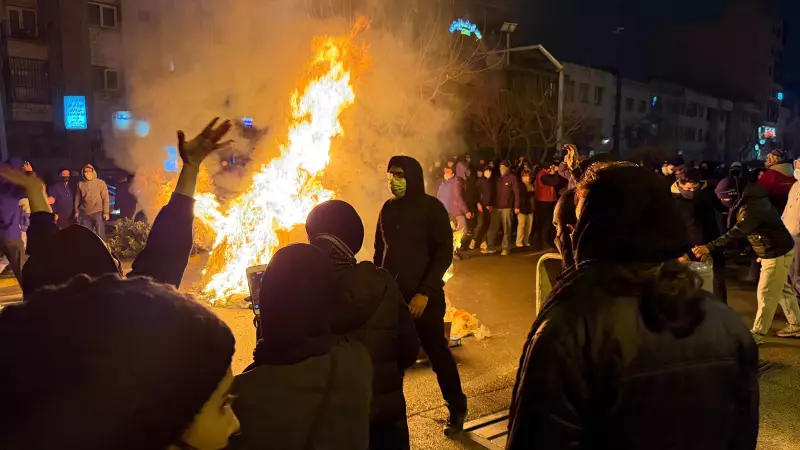
This shift comes despite horrific reports from the ground. International human rights groups estimate the death toll has reached as high as twelve thousand people. The Iranian regime cut internet access and severed communication with the outside world during the crackdown.
Shock and horror spread through Iranian cities and neighborhoods as news of the massacres leaked out.
A Brutal Crackdown Unfolds
The first days of the new year in Iran were marked by accounts of crimes against humanity. Alongside widespread killings, authorities arrested thousands. They charged many with "waging war against God."
The regime is determined to preserve its power at any cost, mirroring its response to the 2022 protests. It relies heavily on lethal force, deploying the Islamic Revolutionary Guard Corps (IRGC) and the Basij militia.
Evidence suggests the government is also using foreign proxy fighters. These include Iraqi Shia militias and the Hashd al-Shaabi forces. Analysts believe Tehran is deploying these foreign elements because domestic security forces might hesitate to kill fellow Iranians.
State television has broadcast images of funeral processions for security personnel killed during unrest in Tehran and other cities. Armed Forces Chief of Staff Abdolrahim Mousavi blamed foreign powers for the destruction.
International Condemnation Without Action
Unlike the 2009 and 2022 protests, the recent December and January demonstrations received support from the White House and the European Parliament.
German Chancellor Friedrich Merz condemned the regime's violent repression. He called the state response "disproportionate" and "brutal." However, Germany did not summon the Iranian ambassador in Berlin to formally convey its displeasure.
A joint statement from Chancellor Merz, French President Emmanuel Macron, and British Prime Minister Keir Starmer failed to announce any concrete measures against Tehran. This lack of decisive action sends a weak signal.
The Risk of Abandonment and Escalation
If President Trump does not intervene despite his recent statements, Iranians will likely view it as a profound abandonment. The government in Tehran may interpret American inaction as a green light for another wave of massacres.
The killing of thousands, mostly young people, will certainly impact the socio-political landscape of Iran. Many citizens still hold a vision for peaceful change. Yet, the savagery of the current repression is shifting perspectives.
The Iranian middle class and those living in poverty are beginning to believe only two options remain: an armed revolt or external intervention to bring down the Islamic Republic.
This potential shift toward violence by a historically peaceful generation is deeply regrettable. It runs counter to Persia's ancient legacy as a civilization known for beauty, intercultural dialogue, and ethnic tolerance.
The writer, Ramin Jahanbegloo, serves as the director of the Mahatma Gandhi Centre for Nonviolence and Peace Studies at OP Jindal Global University.






