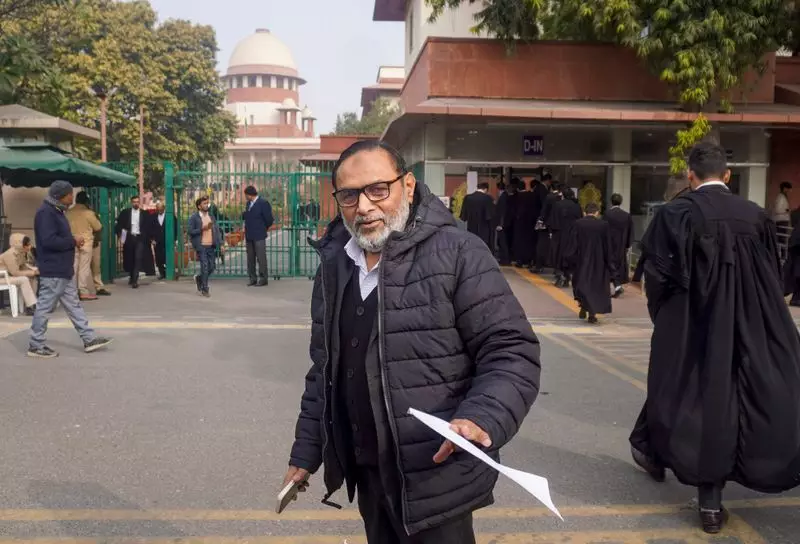
The father of activist Umar Khalid, Syed Qasim Rasool Ilyas, offered a terse and poignant response following the Supreme Court's decision to reject his son's bail plea. When approached by reporters for his reaction, Ilyas simply stated, "I have nothing to say." This brief comment underscores the deep sense of resignation and disappointment felt by the family after the latest legal setback.
A Prolonged Legal Battle Under UAPA
Umar Khalid, a former Jawaharlal Nehru University (JNU) scholar, has been incarcerated since September 2020. He is facing serious charges under the stringent Unlawful Activities (Prevention) Act (UAPA) for his alleged role in a larger conspiracy behind the February 2020 Delhi riots. The violence, which erupted in northeast Delhi, resulted in the deaths of over 50 people and left hundreds injured.
The bail plea was heard by a Supreme Court bench comprising Justices Bela M. Trivedi and Pankaj Mithal. After deliberating on the arguments presented by Khalid's legal team, the bench pronounced its verdict, declining to grant him relief. This decision upholds earlier rulings by the trial court and the Delhi High Court, which had also denied him bail, citing the gravity of the accusations and the constraints of the UAPA law.
The Family's Silent Anguish and Legal Context
Syed Qasim Rasool Ilyas's muted reaction, "I have nothing to say," speaks volumes about the emotional toll the prolonged legal process has taken on the family. It reflects a state of exhaustion and a perceived futility in public commentary after a significant judicial outcome. The family has consistently maintained that Khalid is being targeted for his dissenting political views and that the charges against him are fabricated.
The legal framework of the UAPA makes securing bail exceptionally difficult, as the law sets a very high bar for the accused to prove their innocence at the pre-trial stage. The prosecution's case hinges on Khalid's alleged involvement in a pre-meditated conspiracy to incite violence, a claim his defense vehemently contests.
What Comes Next for Umar Khalid?
With the Supreme Court's refusal to grant bail, Umar Khalid remains in judicial custody as the slow-moving trial continues. His legal team may explore other constitutional remedies, but the path forward is challenging. The case has become a focal point in national debates concerning free speech, state power, and the application of anti-terror laws against activists.
The denial of bail ensures that the activist will spend more time behind bars without a conviction, highlighting the protracted nature of trials under special laws like the UAPA. Human rights organizations and civil society groups have often criticized such lengthy incarcerations during trial as a form of punishment itself.
As the trial proceedings advance in a Delhi court, the nation watches closely. The outcome will not only determine Khalid's future but also set a significant precedent for how dissent and allegations of conspiracy are judicially processed in India. For now, his father's silent despair echoes the sentiments of many who see the case as a critical test for India's legal and democratic principles.