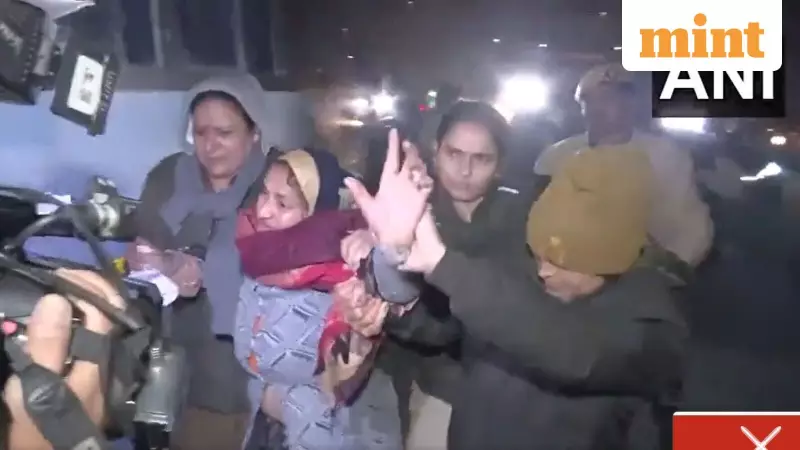
The Delhi High Court's decision to suspend the life imprisonment sentence of expelled BJP leader Kuldeep Singh Sengar in the 2017 Unnao rape case has sparked a fresh wave of protest and controversy. Following the court order, the victim, alongside her mother and a woman activist, staged a demonstration at India Gate in the national capital, vehemently opposing the judicial relief granted to the convict.
Court Order and Stringent Conditions
In a detailed 53-page verdict, the High Court suspended Sengar's sentence pending the disposal of his appeal challenging the December 2019 trial court conviction. However, the suspension comes with a stringent set of conditions designed to safeguard the survivor. Sengar has been directed to furnish a personal bond of ₹15 lakh along with three sureties of an equivalent amount.
The court explicitly barred him from entering a five-kilometer radius of the victim's residence in Delhi and forbade him from threatening her or her mother. Any violation of these conditions would lead to the immediate cancellation of his bail. Furthermore, Sengar must deposit his passport with the trial court and report to the local police station every Monday at 10 AM.

Protest and Police Action at India Gate
Reacting to the court's decision, the survivor, her mother, and activist Yogita Bhayana held a protest at India Gate. They expressed deep apprehension about their safety and the implications of Sengar potentially walking free. The Delhi Police subsequently removed the protesters from the site. Addressing the victim's fears, the High Court noted it expects her CRPF security cover to continue. However, it stated that the threat perception to the survivor could not be a valid argument to deny Sengar the benefit of suspension under Section 389 of the CrPC.
Why Sengar Remains in Prison
Despite the suspension of his sentence in the rape case, Kuldeep Singh Sengar is not eligible for immediate release. He is concurrently serving a 10-year imprisonment term in a separate case related to the custodial death of the victim's father. He has not been granted bail in that case, ensuring he will remain behind bars for the time being. The legal proceedings in his appeal against the rape conviction will continue while the sentence remains suspended.
The case continues to be a focal point for discussions on justice for survivors, the power dynamics involved, and the legal processes surrounding heinous crimes. The High Court's order, balancing legal provisions with security concerns, marks a critical juncture in this long-running and deeply tragic case.