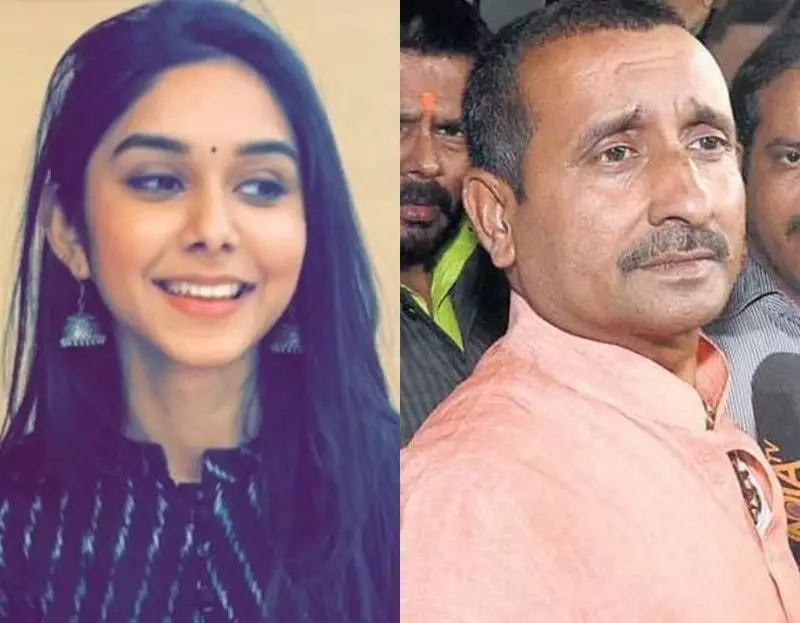
In a dramatic turn of events following a Supreme Court order, Ishita Sengar, the daughter of former BJP MLA and convicted rapist Kuldeep Singh Sengar, has penned a poignant open letter. The letter comes just days after the apex court stayed the interim bail granted to her father by the Allahabad High Court in the infamous 2017 Unnao rape case.
The Supreme Court's Decisive Intervention
The legal saga took a sharp turn on July 12, 2024, when a Supreme Court bench led by Justice B.R. Gavai put an immediate halt to the bail granted to Kuldeep Singh Sengar. The interim bail, sanctioned by the Allahabad High Court on July 10, was effectively frozen. The Supreme Court's decision was a response to a plea filed by the survivor, who argued that the High Court's order was passed without providing her a proper hearing, a fundamental right for a victim in such a serious case.
The court issued notices to both the Central Bureau of Investigation (CBI), which probed the case, and Kuldeep Singh Sengar himself, demanding their responses. The case is now scheduled for a further hearing in the second week of August. This swift action by the top court underscores the gravity with which it views the procedural lapses and the need to ensure the survivor's voice is heard.
Ishita Sengar's Emotional Plea for Her Father
In the wake of this legal setback for her family, Ishita Sengar took to the public domain with a heartfelt open letter. Her writing reveals the deep personal turmoil faced by the family of the convict. While not contesting the legal process, her letter paints a picture of a daughter standing by an aging and ailing father.
Ishita describes Kuldeep Singh Sengar as a "patient of acute diabetes and heart ailments" and expresses grave concerns about his health deteriorating in prison. She appeals to a sense of humanity, questioning whether the system can show mercy considering his medical condition and the time already spent behind bars. Her letter is a stark reminder of the complex human stories that often lie buried beneath high-profile criminal cases.
A Case That Shook the Nation
The backdrop to this current development is one of the most harrowing crimes in recent Indian history. In 2017, a minor girl from Unnao in Uttar Pradesh was raped by Kuldeep Singh Sengar, a then-sitting BJP MLA with significant political clout. The case exploded into national consciousness due to the survivor's relentless fight for justice, which was met with terrifying retaliation.
In a tragic incident in July 2019, the survivor, her lawyer, and two of her aunts were brutally injured when their car was rammed by a truck. Two of her aunts succumbed to their injuries. This event was widely perceived as an attempt to silence the victim and her family. The CBI, which took over the investigation, found Sengar guilty, and in December 2019, a Delhi court sentenced him to life imprisonment for the remainder of his natural life under the Protection of Children from Sexual Offences (POCSO) Act and the Indian Penal Code.
The legal battle has been long and arduous for the survivor. Her fight for a fair trial led to the case being moved from Uttar Pradesh to Delhi. The recent bail order by the Allahabad High Court, now stayed, had reopened old wounds, prompting her to approach the Supreme Court to safeguard the integrity of the judicial process that had finally delivered her justice.
The Road Ahead and Broader Implications
The Supreme Court's intervention has momentarily stabilized a volatile situation. It reaffirms the principle that bail in heinous crimes, especially those involving sexual violence and power imbalances, cannot be granted casually without hearing the victim. The court's upcoming hearing in August will be crucial in determining the next steps.
Ishita Sengar's open letter adds a new, emotionally charged dimension to the public discourse. It forces a confrontation between the unwavering pursuit of legal punishment and questions of familial duty, health, and mercy. However, it stands in sharp contrast to the survivor's continued struggle, which represents the fight of countless victims against a system often skewed in favor of the powerful.
This case continues to be a litmus test for India's judicial system, highlighting the challenges in balancing legal rigor, victim rights, and the human narratives of all involved parties. The nation now watches as the Supreme Court prepares to deliberate once more on a case that has come to symbolize both the failures and the resilience of justice in India.