

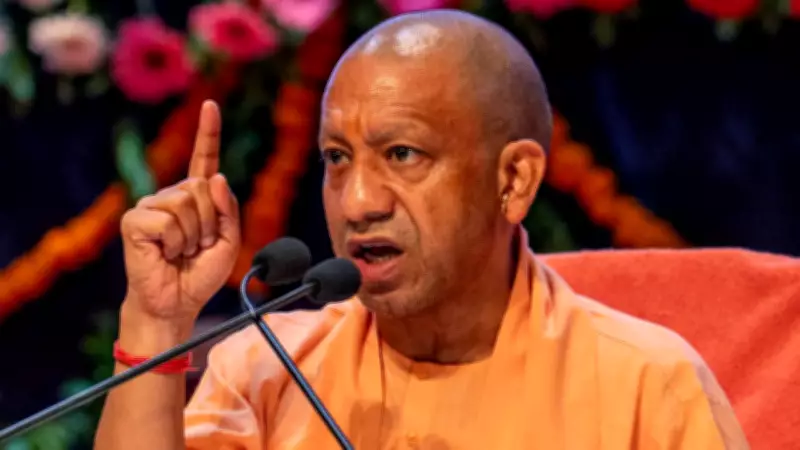
Over the past nine years, Uttar Pradesh has witnessed a significant transformation in its law and order environment. Given its vast geographical spread and population exceeding 24 crore, maintaining public safety has always been a complex governance challenge. The approach of the Yogi Adityanath-led UP government, often referred to as the 'UP Model' of policing, represents a shift from conventional law enforcement towards a technology-driven, intelligence-led, and accountability-focused system. The emphasis has been not only on controlling crime but also on creating a secure environment that supports economic growth, social stability, and public confidence. AI and modern technology have been the buzzwords in policing in Uttar Pradesh.
Crime Rate and Conviction Improvements
While Uttar Pradesh continues to record a large number of criminal cases in absolute terms due to its population size, per-capita indicators present a more balanced picture. According to NCRB data, the state's cognizable crime rate remains below the national average, reflecting improvements in preventive policing and crime detection mechanisms. A notable achievement has been the focus on improving conviction rates. Through initiatives such as Operation Conviction, law enforcement agencies have worked closely with prosecution departments to ensure timely investigation, scientific evidence collection, and speedy trial of serious offences. Particular emphasis has been placed on crimes against women, offences under the POCSO Act, and other heinous crimes. The resulting improvement in conviction rates has strengthened public confidence in the criminal justice system and enhanced deterrence against offenders.
Crackdown on Organized Crime
One of the most visible aspects of Uttar Pradesh's law and order strategy has been its uncompromising stance against organised crime networks, land mafias, illegal mining syndicates, and extortion rackets. Instead of limiting action to arrests alone, the government has targeted the economic foundations of criminal enterprises. Under the provisions of the UP Gangsters and Anti-Social Activities (Prevention) Act, authorities have attached, seized, and demolished illegally acquired assets worth thousands of crores of rupees. This strategy has weakened the financial power of criminal organisations and sent a strong message regarding the consequences of unlawful activities. The strengthening of specialised agencies such as the Special Task Force (STF), Anti-Terrorism Squad (ATS), Economic Offences Wing, and cybercrime units has further enhanced UP's capacity to tackle organised crime, terrorism-related threats, illegal arms trafficking, and interstate criminal networks. Recognising the limitations of traditional policing in a state of Uttar Pradesh's size, the government has invested heavily in technological modernisation.

UP-112 Emergency Response System
The Integrated Technology Enabled Citizen-Centric Service (ITECCS), popularly known as UP-112, has emerged as one of the world's largest integrated emergency response systems. Through GPS-enabled Police Response Vehicles (PRVs), centralised call centres, and real-time dispatch mechanisms, response times have improved substantially across both urban and rural areas. In comparison to the year 2016, in the year 2025, the response time of UP-112 was reduced from 1 hour 5 minutes to 06 minutes 41 seconds, making an unprecedented improvement.
Safe City and Smart Surveillance Infrastructure
The Safe City initiative has led to the deployment of thousands of CCTV cameras, intelligent traffic management systems, facial recognition technologies, and Integrated Command and Control Centres (ICCCs) in major cities such as Lucknow, Noida, Varanasi, Kanpur, Agra, and Prayagraj. These systems facilitate real-time monitoring of public spaces, traffic flows, crowd management, and criminal activities.
Trinetra Digital Intelligence Platform
The Trinetra application provides police personnel with instant access to extensive criminal databases, including photographs, criminal histories, fingerprints, and records of repeat offenders. This has significantly improved field verification, intelligence gathering, and criminal tracking capabilities.

YAKSH App
It is an AI-powered beat book developed by the UP police. Designed for field personnel, it provides instant, statewide access to criminal databases, AI-based suspect identification, missing persons records, and real-time movement alerts to strengthen preventive policing. Key features and functionality include Digital Beat Book, AI Biometrics, Missing Persons Tracking, Gang-Link Analysis, and Real-time Alerts.
Intelligent Traffic Management
The C-RTC Scheme (City-Reducing Traffic Congestion) was introduced as a pilot project across 20 districts in April 2026. The AI-enabled C-RTC Scheme aims to address urban traffic congestion through data-driven traffic management. The system analyses key traffic indicators, including minimum, maximum, and average travel times, to identify congestion-prone routes and traffic bottlenecks. By providing real-time insights, it supports timely interventions and helps maintain smoother traffic flow across urban corridors.
Law and Order as a Driver of Economic Growth
Perhaps one of the most significant outcomes of improved law and order has been its contribution to Uttar Pradesh's economic transformation. Historically, several regions of the state suffered reputational challenges arising from criminal activity, extortion, and weak enforcement. Improved security conditions have strengthened investor confidence and enhanced the state's attractiveness as an investment destination. Major infrastructure corridors such as the Purvanchal Expressway, Bundelkhand Expressway, Gorakhpur Link Expressway, and the upcoming Ganga Expressway are supported by dedicated highway patrol systems, emergency response infrastructure, and surveillance mechanisms. These measures have enhanced the safety of goods movement, logistics operations, and passenger travel. The linkage between effective law enforcement and economic development has become increasingly evident, contributing to the success of investment promotion initiatives and the state's aspiration of becoming a one-trillion-dollar economy.
Zero-Tolerance Policy and Enforcement Actions
The Yogi Adityanath government has pursued a zero-tolerance policy against crime and criminals with remarkable consistency over the past nine years. This approach has been operationalised through consistent enforcement action, resulting in 267 criminals killed in police encounters during the crackdown on dreaded offenders. More than 10,300 wanted criminals have been sent to jail, while stringent laws have been invoked effectively: the Gangsters Act has been applied against 85,118 criminals and the National Security Act (NSA) against 977. The establishment of Police Commissionerates in seven major cities has brought qualitative improvement in policing, faster resolution of public grievances, and sharper crime control, significantly enhancing both responsiveness and accountability in urban centres. A major focus has remained on dismantling organised crime and mafia networks that once operated with impunity. Against 68 identified major mafias and their 1,459 associates, the administration registered 875 cases, arrested 638 individuals, invoked the NSA against 18, and applied the Gangsters Act against 785. This aggressive campaign has led to the confiscation of illegally acquired movable and immovable properties worth over Rs 14,580 crore under the Gangsters Act between March 2017 and December 2025. Additionally, properties worth more than Rs 4,137 crore linked to mafia gangs have been seized. In a strong demonstration of the “double engine” government’s resolve, 35 mafia operators and 94 co-offenders were arrested separately; among them, one has been sentenced to life imprisonment and two to death.
Social Peace and Public Faith
Complementing these enforcement measures has been the maintenance of complete social peace. Since 2017, Uttar Pradesh has recorded not a single major incident of communal riot or caste conflict— a significant departure from its past reputation. These outcomes reflect nine years of institutional innovation and political will that prioritised visible, decisive action over patronage, transforming the state’s law and order landscape through systematic pressure on criminal ecosystems. This sustained enforcement has translated into a broader restoration of public faith in the criminal justice system. With improved conviction rates, faster case disposal through dedicated fast-track courts, and technology-enabled policing, ordinary citizens — especially women and traders — now report crimes more confidently rather than living in fear of reprisal.
Expansion of Policing Infrastructure
The Yogi government has significantly expanded and specialised the policing infrastructure across Uttar Pradesh to address emerging challenges more effectively. In the last nine years, the state has established 134 new police stations, 86 new police posts, and 78 women police posts. Specialised units have also been created, including 75 anti-electricity theft police stations, 10 vigilance police stations, 4 economic crime units, 73 cyber-crime police stations, and 6 narcotics police stations. Additionally, 75 Anti-Human Trafficking Units have been upgraded into full-fledged police stations to strengthen action against organised trafficking networks. These infrastructure upgrades, along with dedicated counselling centres, have enhanced both preventive policing and targeted enforcement in critical areas.
Technology-Driven Citizen-Centric Initiatives
Technology-driven citizen-centric initiatives have also yielded notable results. The UP-112 emergency response system has attended to more than 3.10 crore calls, providing rapid assistance across the state. The Cyber Helpline Desk, launched within UP-112 on 28 May 2021, has received and processed a total of 7,52,422 complaints to date, all registered on the cyber portal for swift action and resolution.
Decline in Crime Rates
There has been a significant decrease in crimes every year compared to the year 2016: 90 per cent in robbery, 85 per cent in loot, 47 per cent in murders, 70 per cent in rioting incidents, 62 per cent of kidnappings for ransom, 19 per cent in dowry deaths, and 53 per cent of rape cases.
Helplines and Emergency Services
Key helplines include: 1090 Women Power Line, 1098 Child Line, 181 women helpline, 102/108 ambulance service, 112 police emergency service, 101 fire service, 1930 cyber helpline, and 1076 chief minister helpline.
Operation Conviction: Speedy Justice and Effective Prosecution
Operation Conviction is a flagship initiative launched by the Government of Uttar Pradesh on 1 July 2023 to ensure the speedy investigation, prosecution, and conviction of criminals in serious criminal cases. Operation Conviction has emerged as one of Uttar Pradesh's most significant criminal justice reforms. By focusing on speedy investigations, effective prosecution, and timely convictions, the initiative has transformed the state's approach from merely registering cases and making arrests to ensuring successful judicial outcomes. The programme has delivered impressive conviction figures, strengthened public trust in law enforcement, and reinforced Uttar Pradesh's commitment to maintaining law and order through a robust and accountable justice delivery system. The initiative was launched under the state's zero-tolerance policy toward crime with the objective of ensuring offenders are punished swiftly, and victims receive timely justice. It covers serious offences such as murder, rape, crimes under the POCSO Act, kidnapping, dacoity, robbery, cow slaughter, organised crime, and other heinous offences.
Key Features of Operation Conviction
Operation Conviction adopts a mission-mode approach for criminal justice delivery. The programme focuses on: identification of priority criminal cases for fast-track investigation and prosecution; immediate arrest of the accused persons; scientific and time-bound investigation; timely filing of charge sheets; strong coordination between police, prosecution, and courts; continuous monitoring through digital platforms and review mechanisms; and effective presentation of evidence before courts to secure convictions.
Outcomes of Operation Conviction
The initiative has produced significant results since its launch. According to official data, more than 97,000 criminals were convicted between July 2023 and mid-June 2025 under Operation Conviction. Out of over 1.14 lakh identified cases, more than 74,000 cases were disposed of, demonstrating a remarkable improvement in criminal case management and prosecution outcomes. Notable achievements include: conviction of 97,158 criminals between July 2023 and June 2025; 68 offenders were awarded death sentences; 8,172 offenders sentenced to life imprisonment; 1,453 offenders sentenced to imprisonment exceeding 20 years; more than 87,000 offenders were sentenced to imprisonment of up to 20 years; conviction of 395 accused in cases involving the state's top ten criminals; conviction of 29 identified mafia members; and strong action in crimes against children, including multiple death and life imprisonment sentences under the POCSO Act. Uttar Pradesh Police reported a conviction rate of approximately 93 per cent under Operation Conviction during 2025-26. During the period from May 2025 to May 2026, courts decided over 32,000 criminal cases, resulting in convictions in nearly 30,000 cases and sentencing of more than 42,000 accused persons. This reflects a substantial strengthening of the state's prosecution system and criminal justice delivery framework.
Impact on Law and Order
Operation Conviction has contributed significantly to improving law and order in Uttar Pradesh by creating a strong deterrent against crime. The initiative has reinforced the message that criminal activities will not only lead to arrest but also to swift punishment through the judicial process.
Cybersecurity Framework
Uttar Pradesh has emerged as a national leader in strengthening cybersecurity and combating cybercrime through a comprehensive, technology-driven policing system. In response to the rising threats of online fraud, financial scams, identity theft, and other cybercrimes, the state has established a robust cybersecurity infrastructure spanning all its districts, encompassing prevention, detection, investigation, and public assistance. A major milestone in this effort is the operationalisation of dedicated cybercrime police stations across all 75 districts of the state. These specialised units are supported by the 'Cyber Help Desk' at local police stations, enabling citizens to easily report cybercrimes and receive timely assistance. This decentralised system has significantly enhanced the accessibility and speed of cybercrime resolution. To provide round-the-clock assistance to victims, the Uttar Pradesh Police has established a state-of-the-art, standalone cyber call centre in Lucknow. The existing 30-seat facility is capable of handling approximately 5,000 calls daily. With the addition of another 30 seats, the call-handling capacity is expected to rise to 9,000 calls per day, facilitating faster responses and improved accessibility for citizens. Capacity building has also been a key area of focus. Through the 'Cy-Train' portal, 65,608 police personnel have been trained in cybercrime investigation, digital forensics, cyber laws, and emerging technological threats. Furthermore, trained Cyber Commandos have been deployed across police zones and headquarters to bolster the state police's operational readiness against complex cyber threats.
Results in Cybercrime Enforcement
The results of these initiatives are evident in the state's enforcement record. Since 2017, Uttar Pradesh has registered 87,850 cybercrime cases, of which 75,272 have been successfully resolved. Legal action has been taken against 53,639 accused individuals, reflecting the government's approach to investigation and prosecution. Furthermore, the Uttar Pradesh Police has recovered ₹382.25 crore lost to cyber fraud, providing significant relief to victims and boosting public confidence in law enforcement. The effectiveness of Uttar Pradesh's cybercrime strategy is also evident in national statistics. According to the 2023 report by the National Crime Records Bureau (NCRB), the state achieved a conviction rate of 87.8 per cent in cybercrime cases — nearly double the national average. The state also recorded the highest number of arrests in cybercrime cases, demonstrating the efficiency of its investigation and prosecution mechanisms. Through institutional strengthening, technological innovation, comprehensive training, and citizen-centric services, Uttar Pradesh has built one of India's most effective cybersecurity ecosystems, setting a precedent for other states in tackling the challenges of the digital age.
Women Safety Initiatives
The Uttar Pradesh government, under the leadership of Chief Minister Yogi Adityanath, has prioritised women's security through a 'zero-tolerance' policy toward crime and a comprehensive, mission-mode approach. The state's strategy focuses on integrating technology, dedicated infrastructure, and rapid response mechanisms to ensure the safety, dignity, and empowerment of women.
Mission Shakti
This is the flagship statewide programme dedicated to the safety, dignity, and empowerment of women. It operates in phases and involves interdepartmental coordination to create an environment where women can live, work, and travel without fear. Key features include: establishment of Mission Shakti Kendras in every police station across the state; training provided to 40,000 police personnel for the functioning of these centres; all units dealing with crimes against women at police stations were brought under the ambit of the Mission Shakti Kendra; dedicated pink booths, two-wheeler petrol, and four-wheeler patrol vehicles to improve police presence and accessibility; and provision of scooties for every Mission Shakti Kendra in the state. A decline in crime was observed between September 2025 and December 2025 following the establishment of Mission Shakti Kendras: reductions recorded include 33.92% in rape incidents, 17.03% in the abduction of women and children, 12.96% in dowry deaths, and 9.54% in domestic violence cases. Uttar Pradesh ranked first in the country with a 98.90% resolution rate for crimes against women and children, according to the ITSSO portal. The state currently holds the top position in the country with a pendency rate of 0.20%. Allocation of 9,172 Women Beats alongside the appointment of 19,839 female police personnel.
Women Power Line 1090
It is a state-of-the-art 24/7 call centre that provides quick responses to harassment, stalking, and domestic violence. It uses a unique counselling-based mechanism to engage with offenders and their families to stop harassment. Integration of services includes Women Power Line 1090, G.R.P., Fire Services, and Women's Helpline 181. Formation of 'Anti-Romeo Squads' in every district. Establishment of the Women and Child Safety Organisation 1090. Deployment of a female Station House Officer (SHO) at one additional police station in every district, in addition to the dedicated women's police station. Formation of three women's PAC (Provincial Armed Constabulary) battalions; the process of establishing new battalions in Balrampur, Jalaun, Mirzapur, Shamli, and Bijnor is currently underway. Successful implementation of initiatives such as Mission Shakti 5.0, Operation Garuda, Operation Shield, Operation Destroy, Operation Bachpan, Operation Khoj, Operation Dial, and Operation Raksha, aimed at the safety, dignity, and empowerment of women and girls.
Suicide Prevention Initiative
In a particularly impactful intervention, first of its kind in the world, UP Police, in agreement with META, saved approximately 3000 lives by taking cognisance of suicide-related posts on social media platforms. These measures reflect a modern, proactive approach that combines physical infrastructure expansion with digital responsiveness, strengthening both preventive care and emergency support systems. This endeavour has won appreciation from the rest of the country and received the Skoch Award (Category - Gold) for the year 2025 for its innovative initiative of Meta Suicide Alert.
Encomiums and Recognition
At the 105th Skoch Summit, the Integrated Command and Control Centre (ICCC) established at Mahakumbh-25 and the UP Police Social Media Centre were honoured with the prestigious Skoch Award (Category - Gold) for the year 2025 for their innovative initiative of Meta Suicide Alert. The UP Police became the first police agency in the world to use social media as an innovative tool to save lives. The UP Police became the only police force in the country to be honoured in two different categories of the Skoch Award.





