

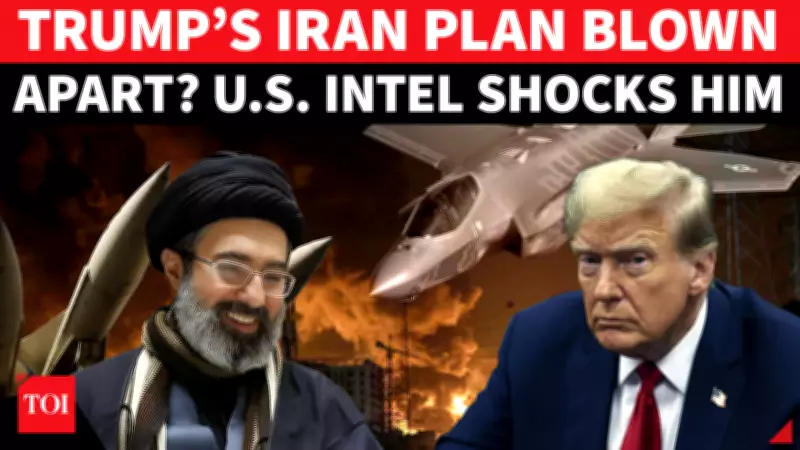
US Intelligence Report Contradicts Trump's Iran War Strategy
In a significant development that challenges former President Donald Trump's military approach, US intelligence agencies have confirmed that Iran's Islamic Republic regime remains intact and firmly in control despite nearly two weeks of intensive bombardment by US and Israeli forces. The assessment comes after strikes that resulted in the deaths of Supreme Leader Ali Khamenei and numerous top commanders of the Islamic Revolutionary Guard Corps (IRGC).
Regime Stability Defies Expectations
According to detailed intelligence reports, Iran's governmental structures have maintained public control and operational continuity throughout the conflict period. The findings indicate that the regime is not facing imminent collapse, contrary to what some war strategists had anticipated. This revelation raises substantial questions about the effectiveness of the Trump administration's decision to pursue large-scale military action against Iran.
Strategic Complications and Regional Implications
The intelligence assessments complicate ongoing efforts to resolve the conflict, which has already triggered significant surges in global oil prices and mounting political pressure on multiple fronts. Analysts examining the situation suggest that toppling Iran's current leadership would likely require either a full-scale ground invasion by foreign forces or a substantial internal uprising—both options carrying enormous risks.

Military experts warn that either scenario could potentially ignite a far wider regional war across the Middle East, drawing in additional nations and creating unprecedented security challenges. The intelligence findings underscore the resilience of Iran's political and military institutions despite suffering leadership losses at the highest levels.
Broader Geopolitical Consequences
The situation presents a complex geopolitical puzzle for the United States and its allies. The intelligence community's assessment that Iran's regime remains stable despite significant military pressure suggests that:
- Iran's internal security apparatus has maintained functionality
- The country's command structures have demonstrated continuity
- Public control mechanisms remain operational despite external attacks
- The regime's survival capabilities have been underestimated
These developments occur against a backdrop of escalating regional tensions, with multiple flashpoints emerging across the Middle East. The intelligence findings are likely to influence future policy decisions regarding conflict resolution strategies and regional stability efforts.






