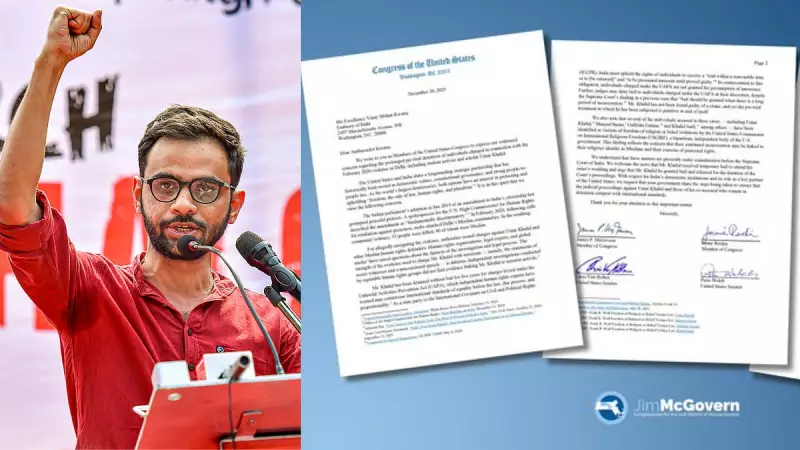
In a significant international development, more than thirty members of the United States Congress have written to the Indian government, urging authorities to grant a fair and timely trial to activist and former JNU student Umar Khalid. Khalid has been imprisoned for over three and a half years under the stringent Unlawful Activities (Prevention) Act (UAPA) in connection with the 2020 Delhi riots.
Congressional Letter Calls for Judicial Fairness
The letter, dated May 21 and addressed to the US Ambassador to India, Eric Garcetti, was signed by 34 lawmakers. It highlights deep concerns over the prolonged detention of Umar Khalid without a conclusive trial. The lawmakers emphasized the importance of upholding democratic principles and human rights, calling for the Indian judiciary to expedite the process and ensure transparency.
This diplomatic intervention underscores the growing international scrutiny of India's application of anti-terror laws like the UAPA against activists and dissenters. The letter specifically points to the "disturbing pattern" of using such legislation to detain individuals for extended periods without bail or a speedy trial.
Solidarity from New York: Zohran Mamdani's Note
Adding a personal dimension to the political support, New York State Assemblymember Zohran Kwame Mamdani sent a handwritten note of solidarity to Umar Khalid in Delhi's Tihar Jail. Mamdani, a democratic socialist, expressed his admiration for Khalid's resilience and assured him that his struggle is recognized globally.
Mamdani's note, a simple yet powerful gesture, was delivered as part of a broader campaign to keep international attention focused on Khalid's case. It represents a bridge between political advocacy and personal empathy, showing that Khalid's imprisonment has resonated with elected officials and activists far beyond India's borders.
The Legal Battle and Wider Implications
Umar Khalid was arrested by the Delhi Police in September 2020. The charges against him allege a larger conspiracy behind the communal violence that erupted in Northeast Delhi in February 2020. His bail pleas have been repeatedly denied, with courts citing the seriousness of the charges under the UAPA.
The intervention by US lawmakers is likely to be viewed through the lens of diplomatic relations. It places the spotlight on India's internal legal processes and could influence future discourse on human rights dialogues between the two nations. The core demand remains clear: moving the case towards a conclusive and just trial, respecting the fundamental legal principle that detention without trial should not become the punishment itself.
As the case continues to wind its way through the Indian judicial system, this external pressure highlights the international dimension of domestic human rights issues. The call for a fair trial is not just about one individual but touches upon the universal values of justice and due process that form the bedrock of any democracy.