In a significant development in the long-running legal saga, disgraced Hollywood producer Harvey Weinstein is contemplating a guilty plea to resolve a rape charge in New York. This move aims to prevent a third trial in the landmark #MeToo-era case, as revealed by his lawyer and a judge on Thursday.
Weinstein's Plea Bargain Considerations
Judge Curtis Farber has asked Weinstein's defense team to inform prosecutors within two weeks about their client's decision regarding a potential guilty plea. Prosecutors have not offered any special deals. However, Weinstein could plead guilty to the crime as charged, which is a low-level felony. His lawyer, Arthur Aidala, indicated that the 73-year-old might agree to this if assured that any prison sentence for the rape charge would run concurrently with a separate, higher-level sexual assault conviction. Judge Farber declined to overturn that previous conviction on Thursday.
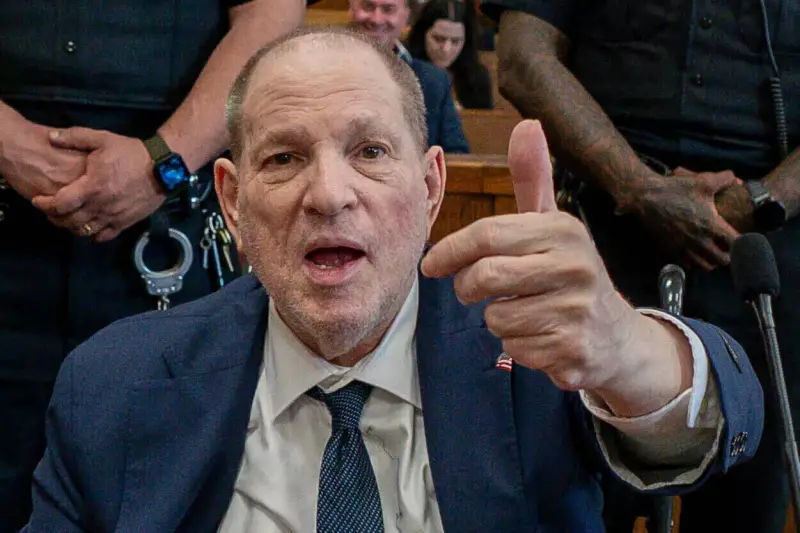
Weinstein, who appeared pale and spoke emphatically in court, expressed that his "spirit was breaking" after nearly six years behind bars, currently at New York City's Rikers Island jail. "I live in constant anxiety, unable to sleep, haunted by the thought that I will die in this place," he stated. Suffering from myriad health problems, he was brought to court in a wheelchair. While admitting to being unfaithful and acting wrongly, he insisted, "I never assaulted anyone."

Claims of an Unfair Trial and Jury Misconduct
Weinstein and his legal team argued that the verdict from last June was tainted by infighting and bullying among jurors. They contended that the tensions amounted to threats that poisoned the deliberation process and that Judge Farber did not investigate these claims thoroughly enough. "You witnessed the trial and saw how forces beyond my control stripped me of my most basic right to be judged fairly," Weinstein told the judge, imploring him to at least hold a hearing on the alleged jury tensions.
Judge Farber firmly rejected these assertions, responding, "You had a fair trial." He added that whatever occurred in the jury room was part of the normal, sometimes heated, course of deliberations and did not rise to the level of improper conduct.
The Long Road Through the Justice System
This hearing marks the latest convoluted turn in the former Hollywood honcho's journey through the criminal justice system, which has spanned seven years and trials in two states. The case saw a conviction reversal and a messy end to last year's retrial. In that retrial, Weinstein was convicted of forcing oral sex on one woman, acquitted of forcibly performing oral sex on another, and the jury could not reach a verdict on the rape charge involving a third woman.
The existing sexual assault conviction carries a potential sentence of up to 25 years in prison. The pending rape charge is punishable by up to four years, which is less time than Weinstein has already served. Outside the courtroom, his lawyer noted that Weinstein was "not strongly considering" a guilty plea but was thinking about it for the sake of his children.
The allegations against Weinstein, which became public in 2017, were a catalyst for the global #MeToo movement. While he early on apologized for his past behavior with colleagues, he has consistently denied all charges of non-consensual sex. His defense has maintained that the women involved engaged in consensual relationships in pursuit of career advancement and later fabricated accusations for financial gain and attention.
Currently held in New York, Weinstein is also appealing a separate rape conviction in Los Angeles. For now, he remains on course for a retrial in New York, which could begin as soon as March.